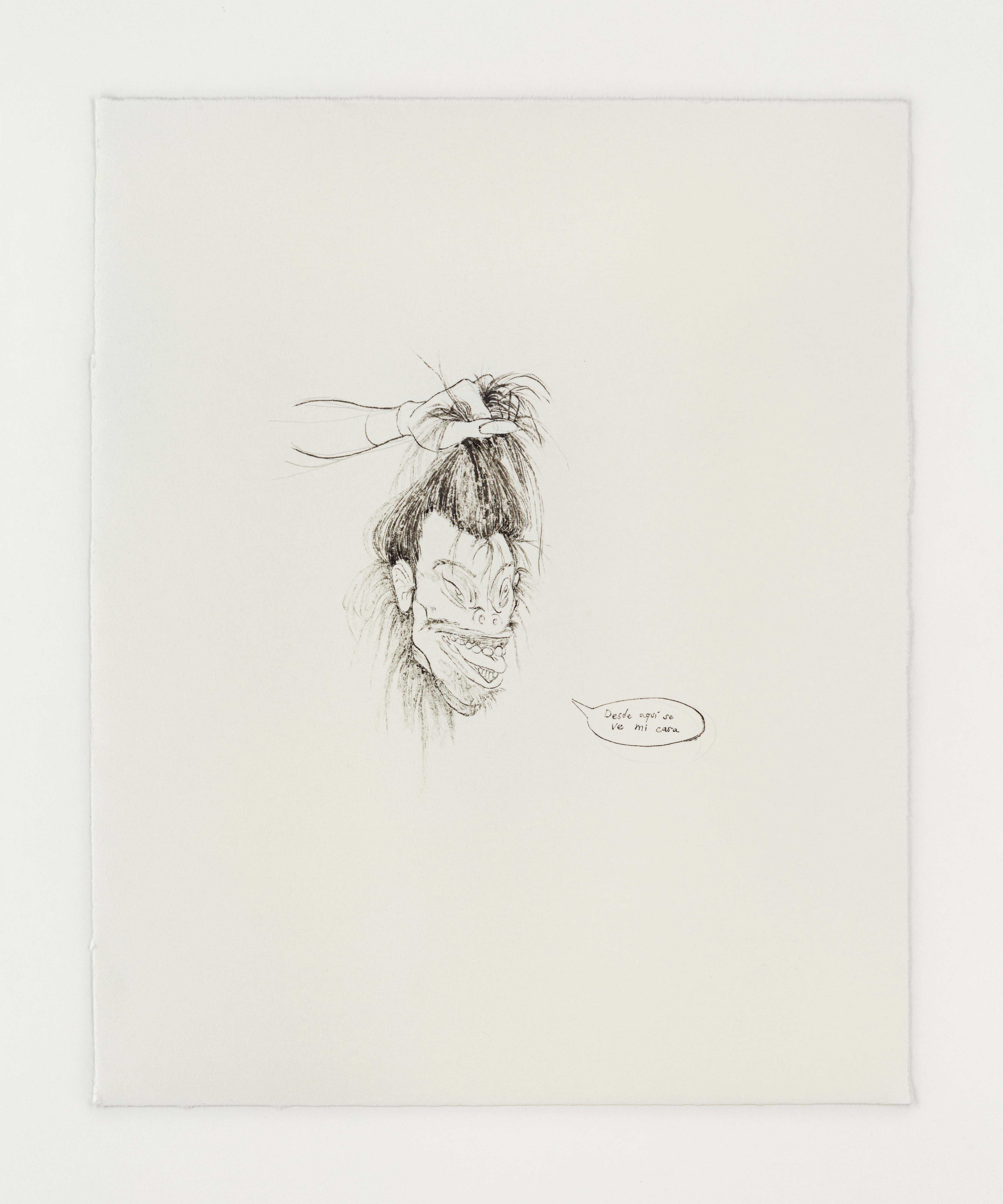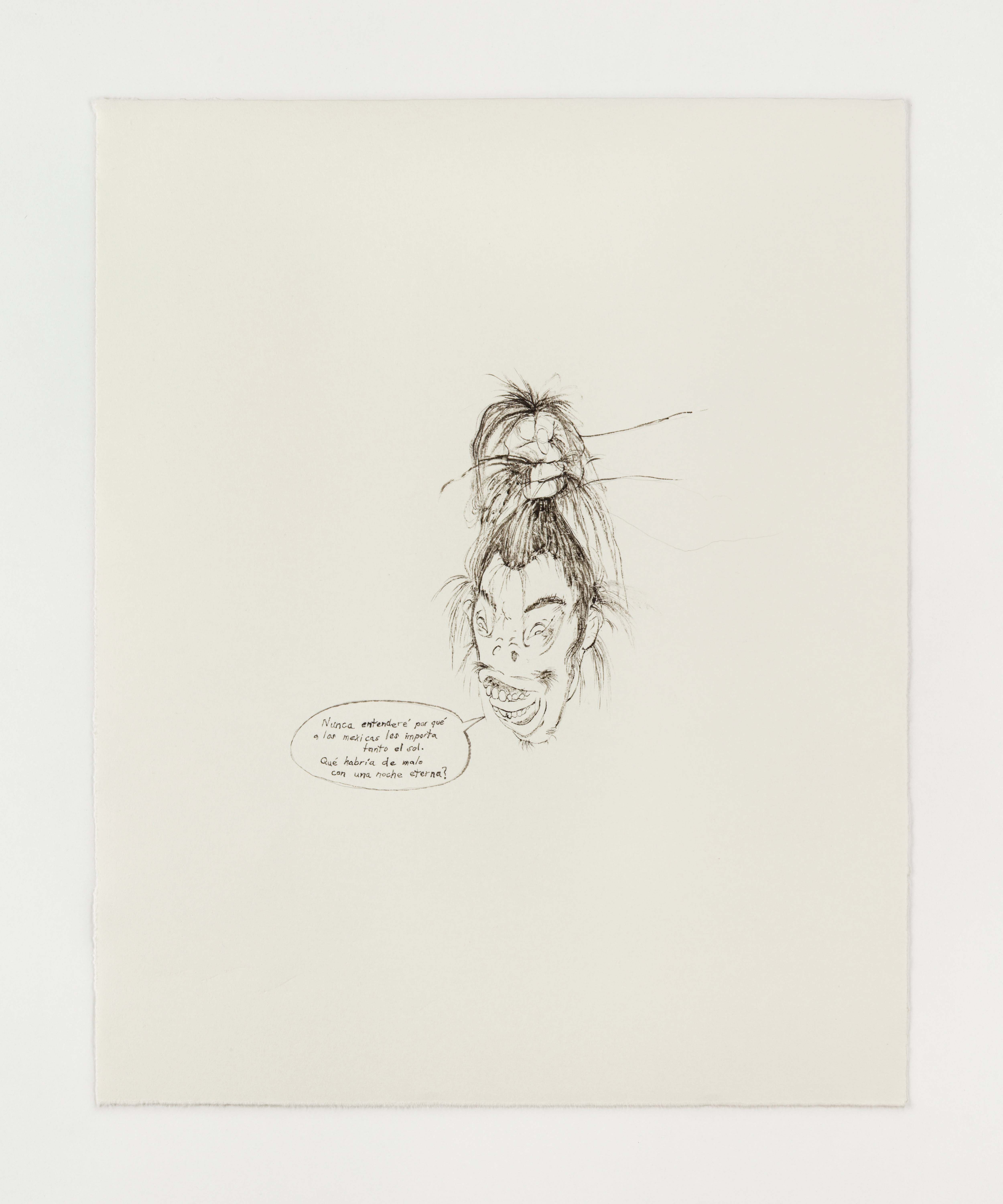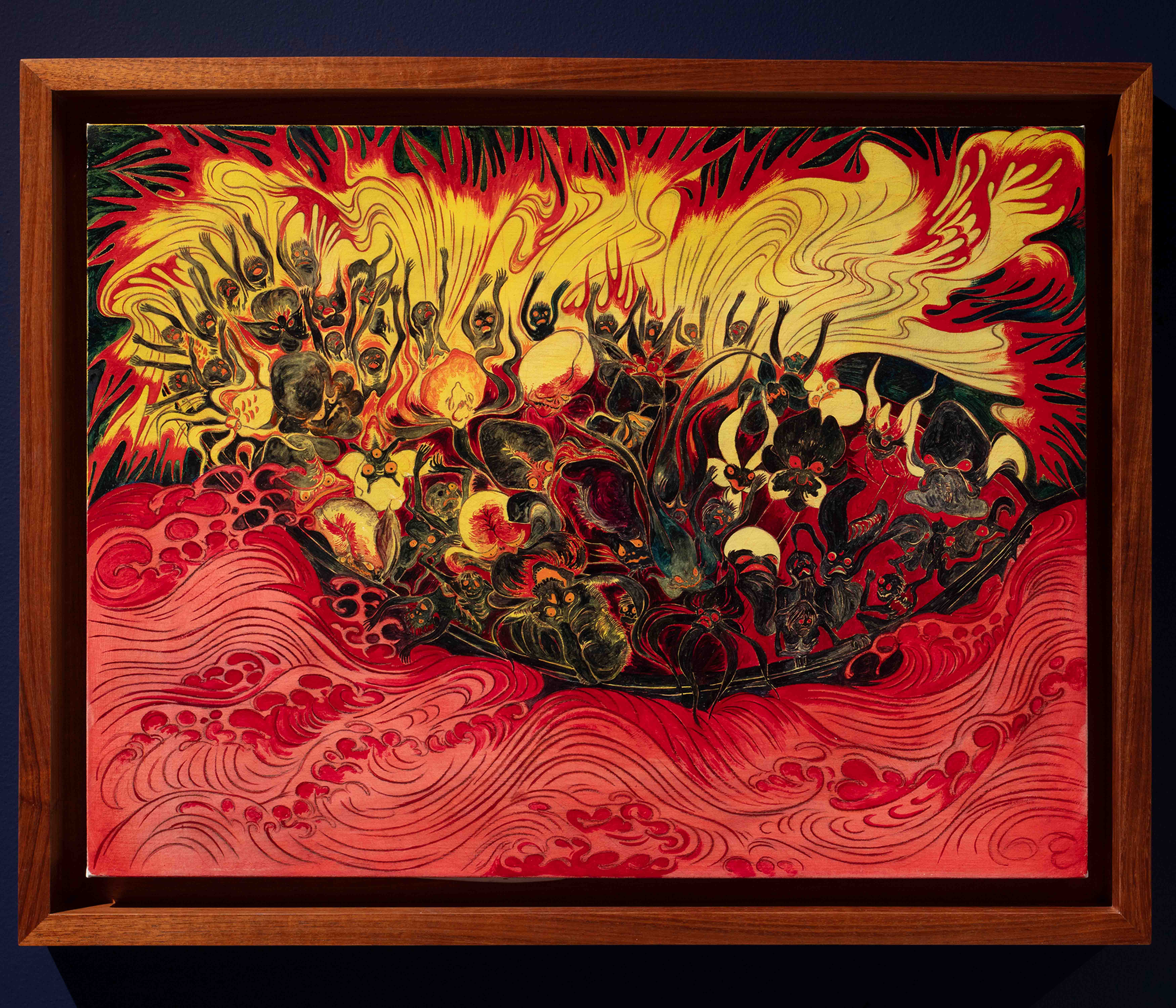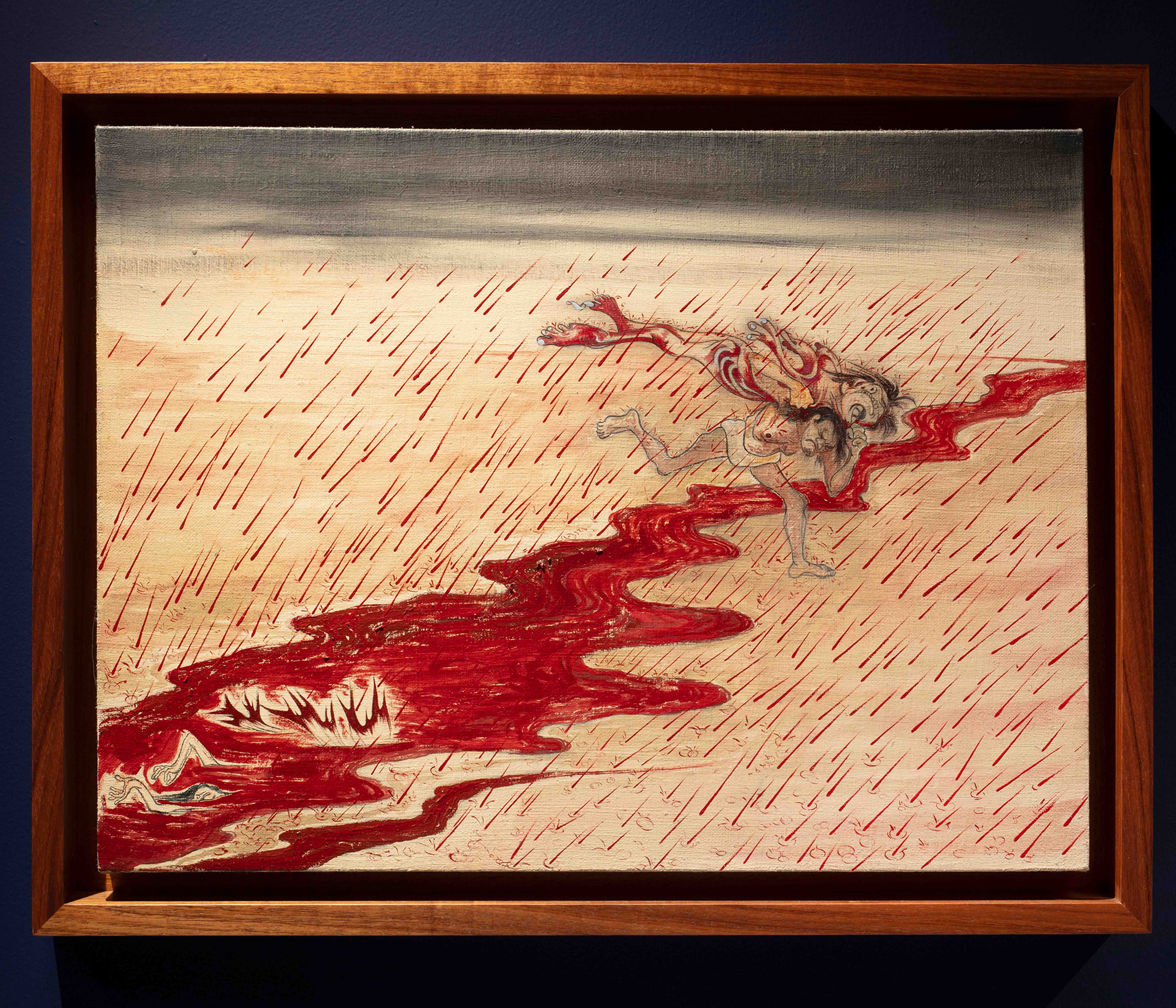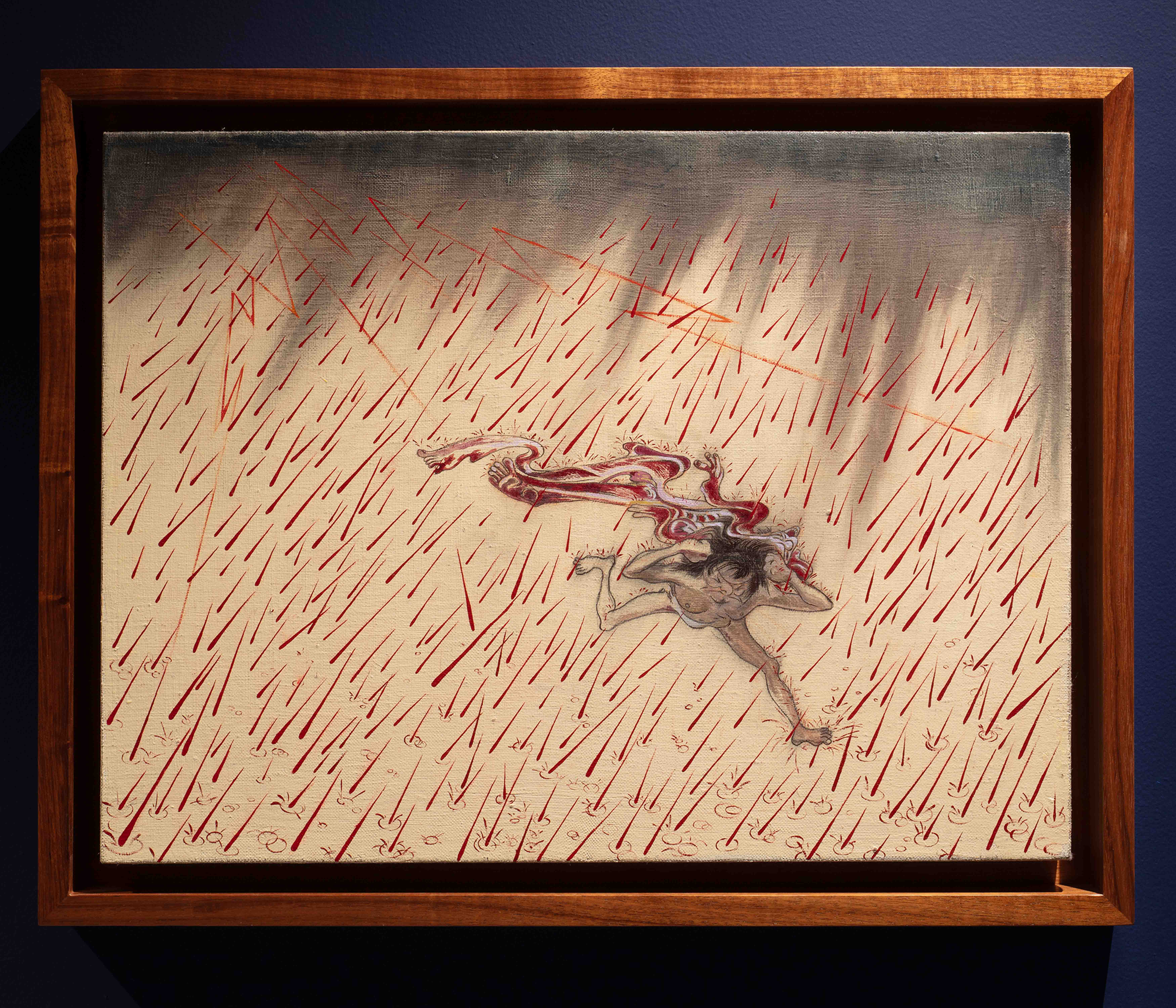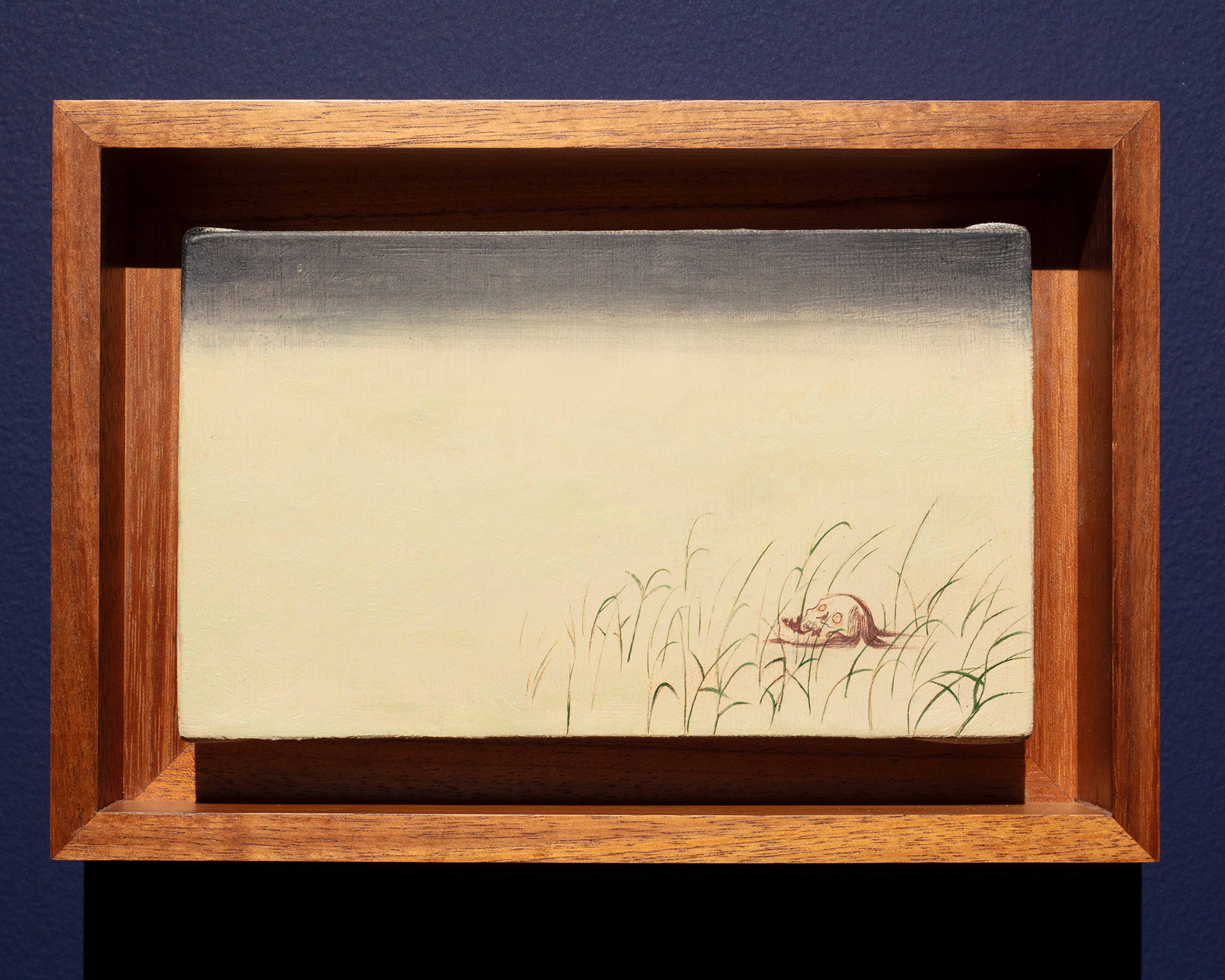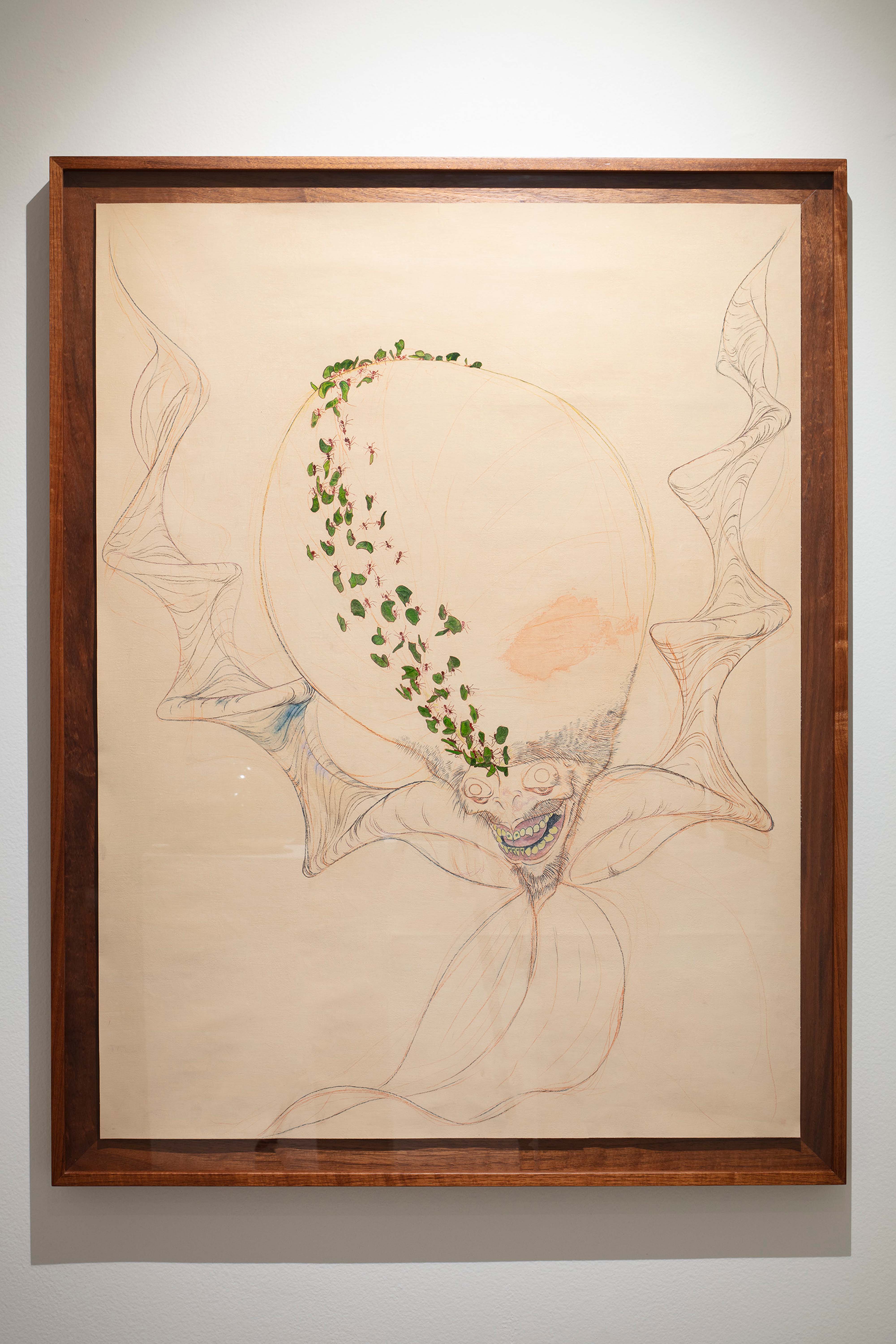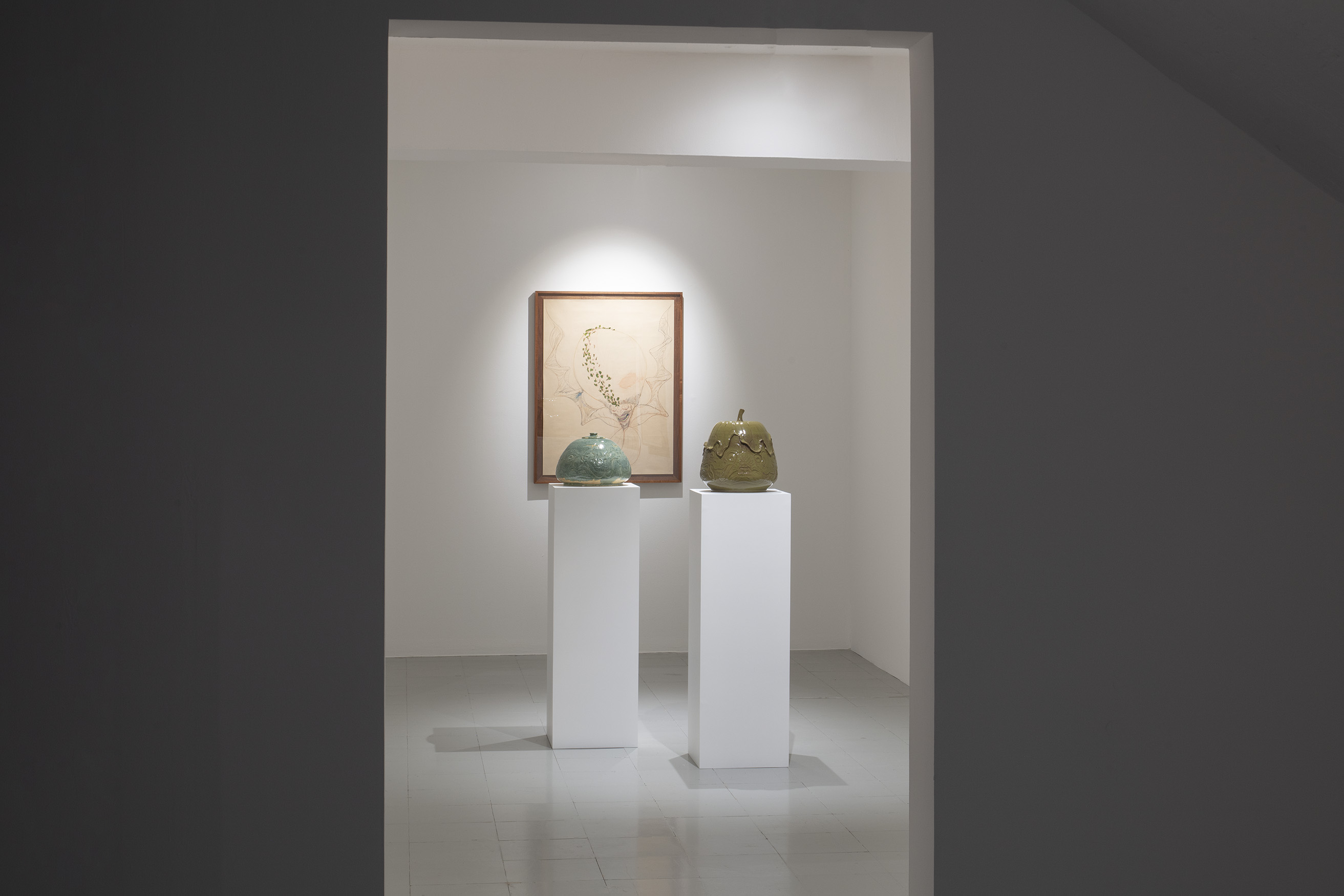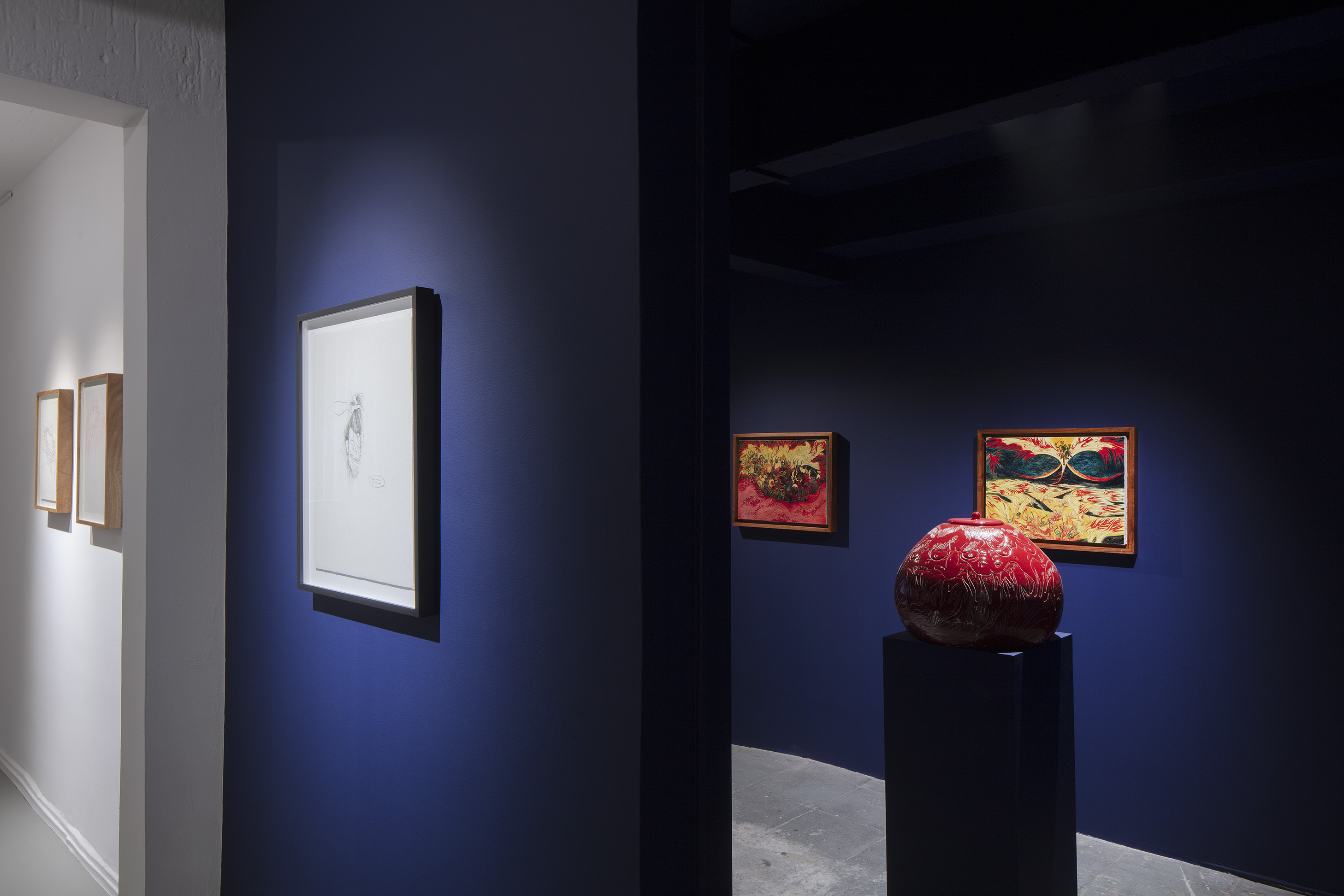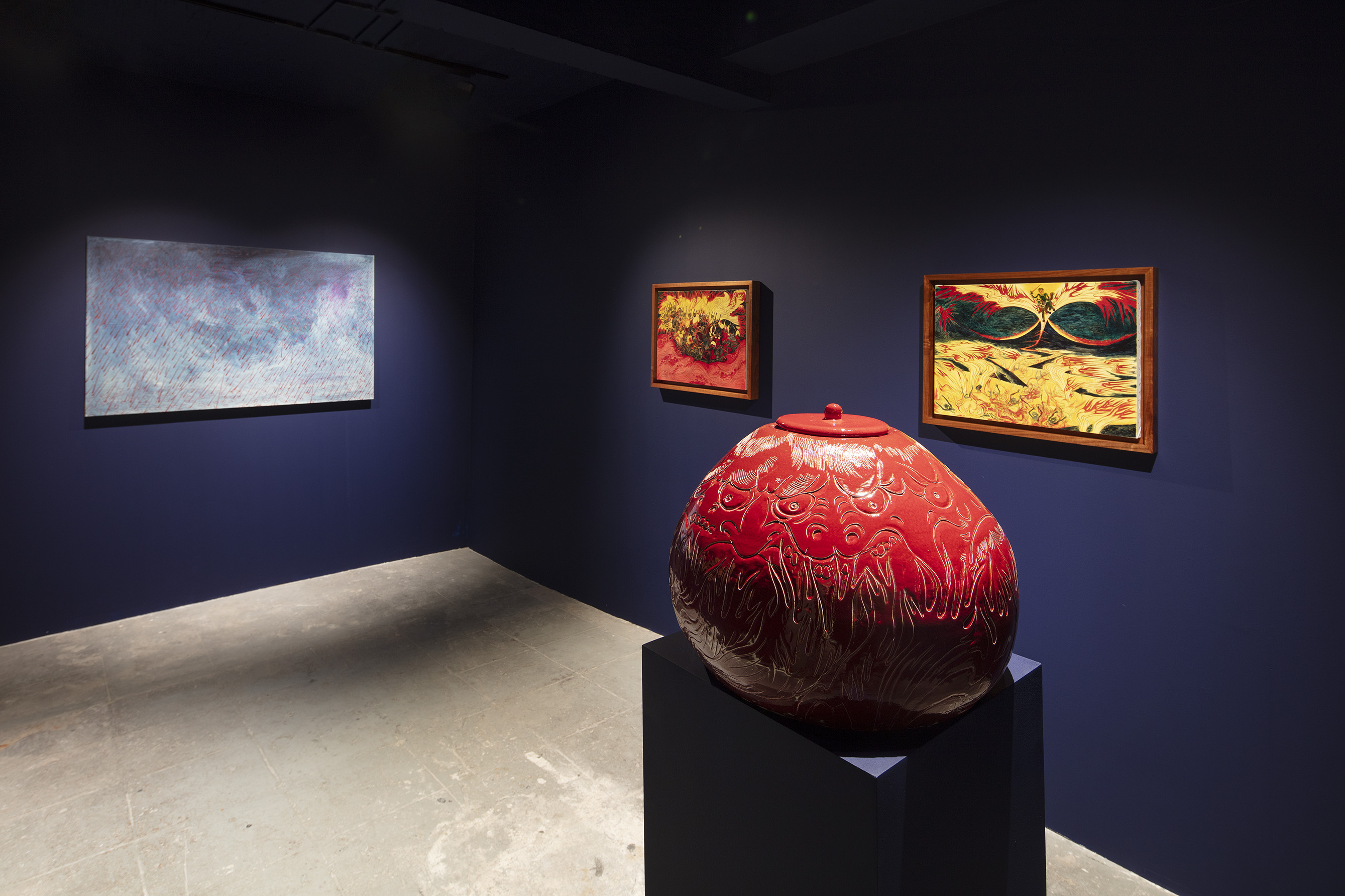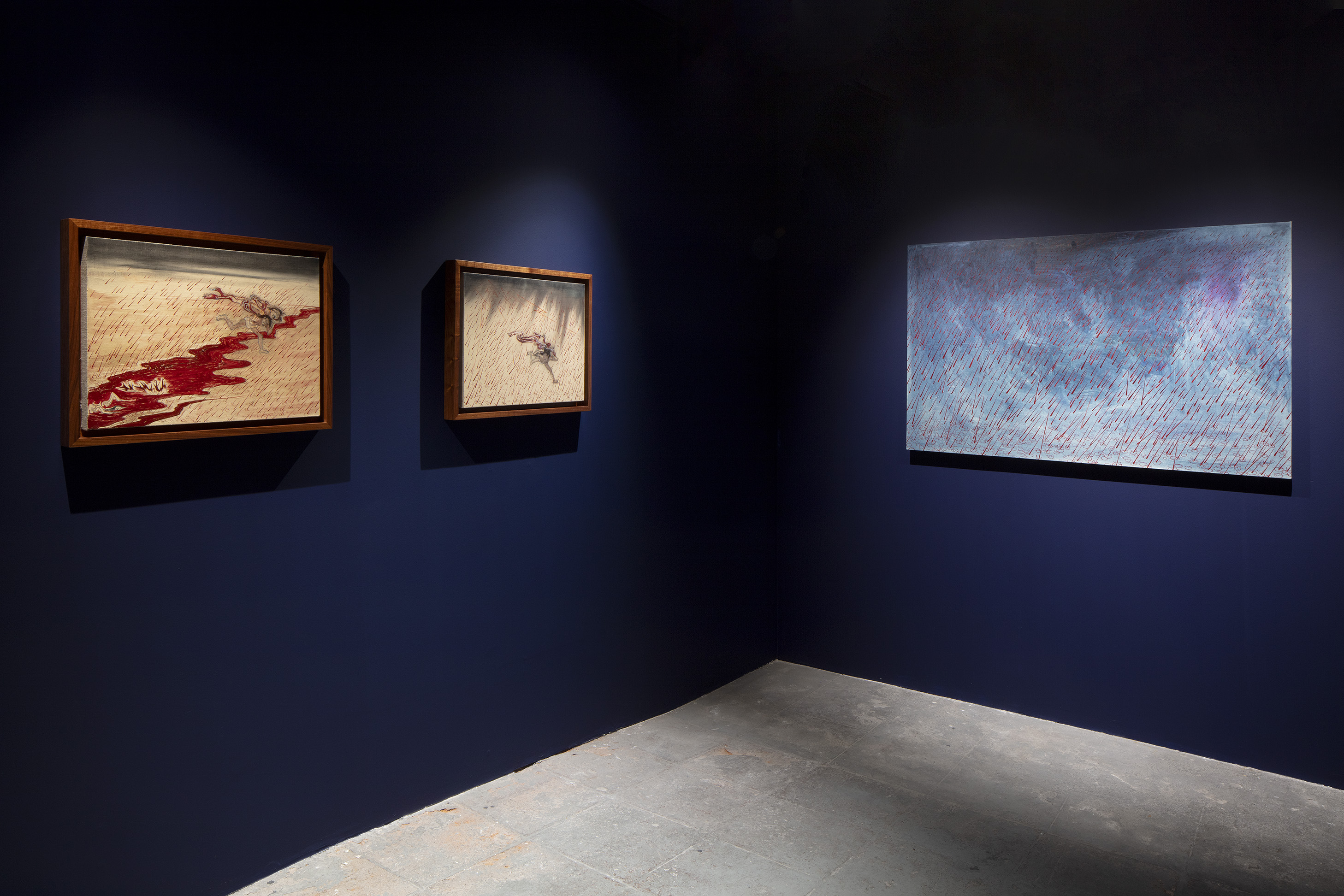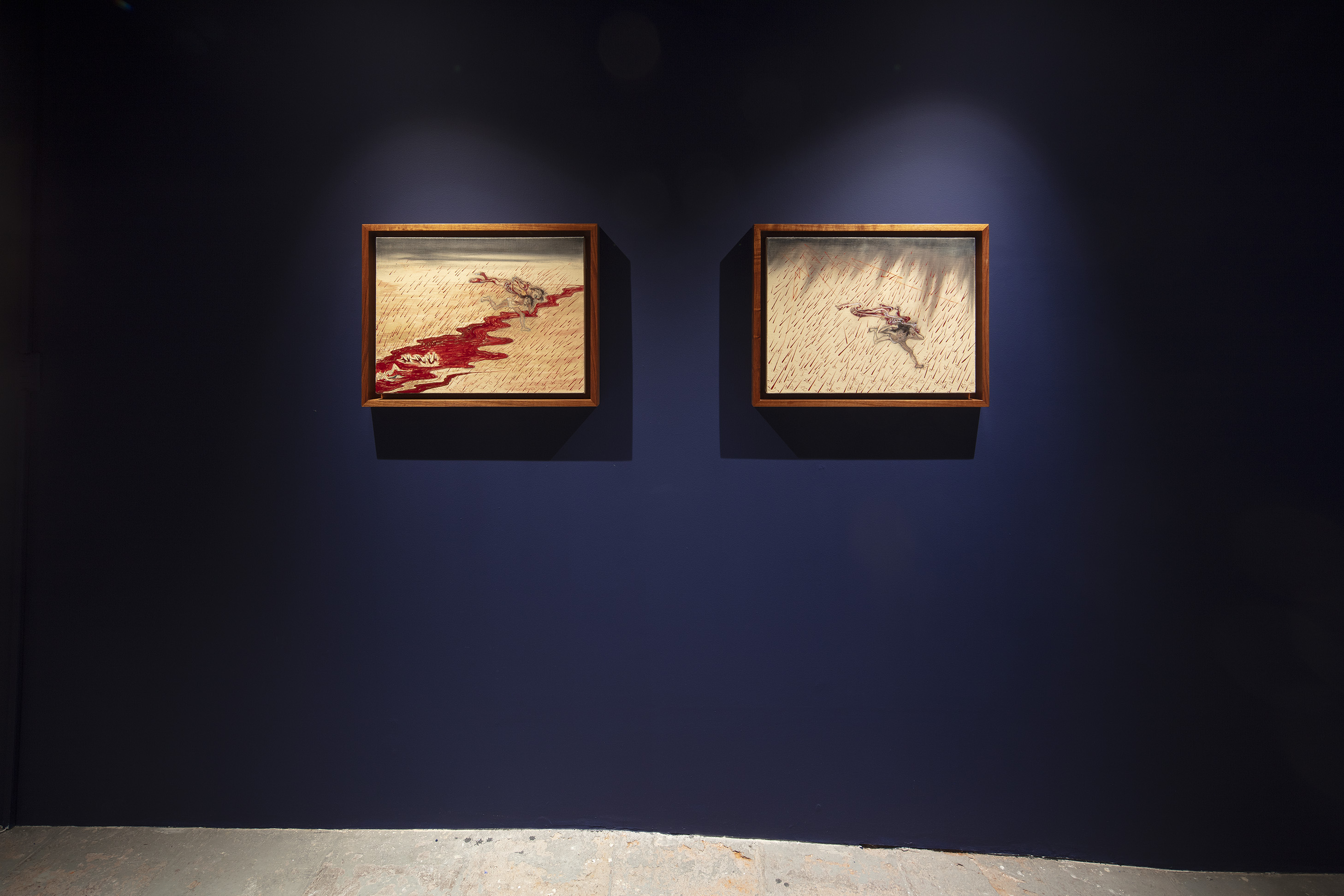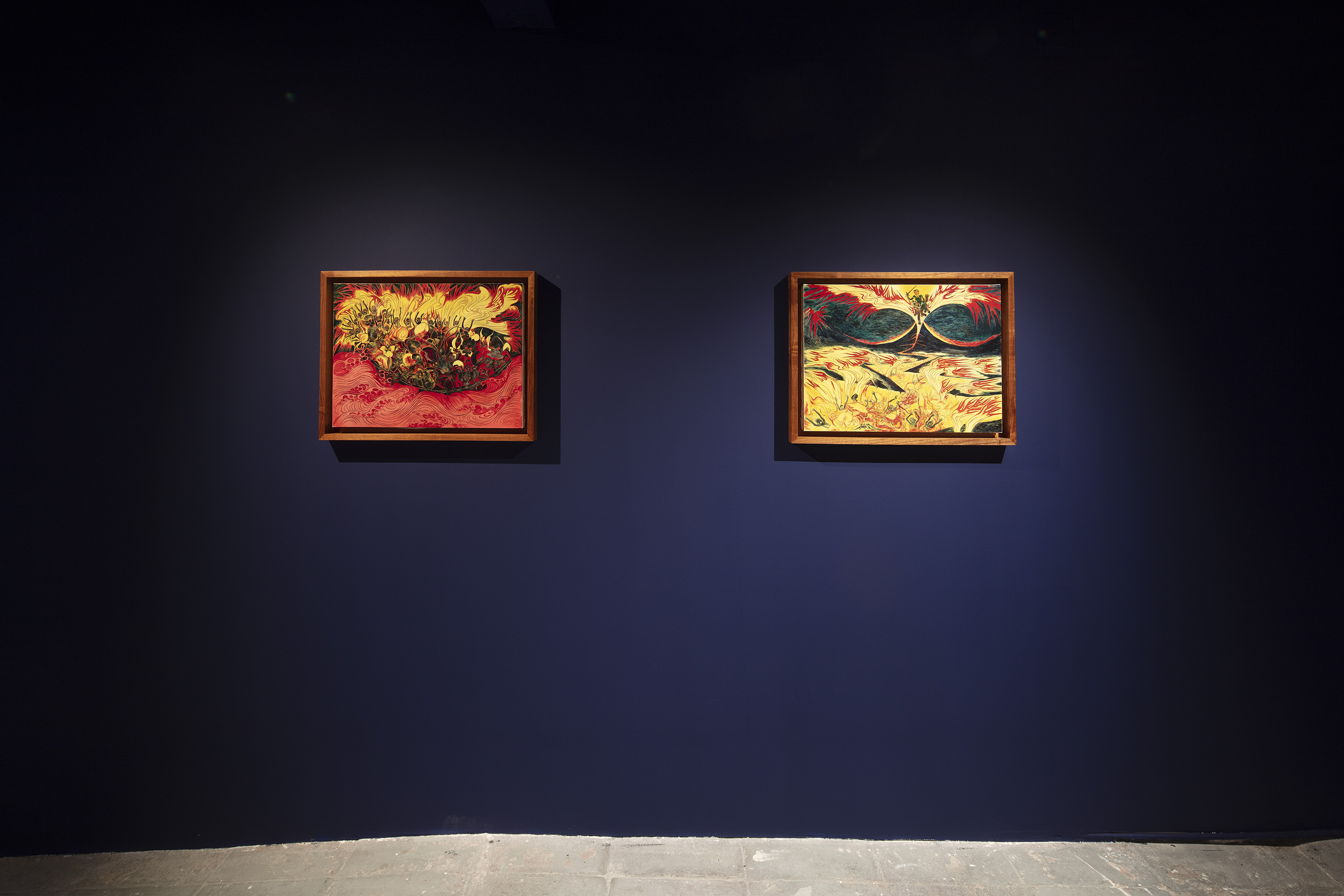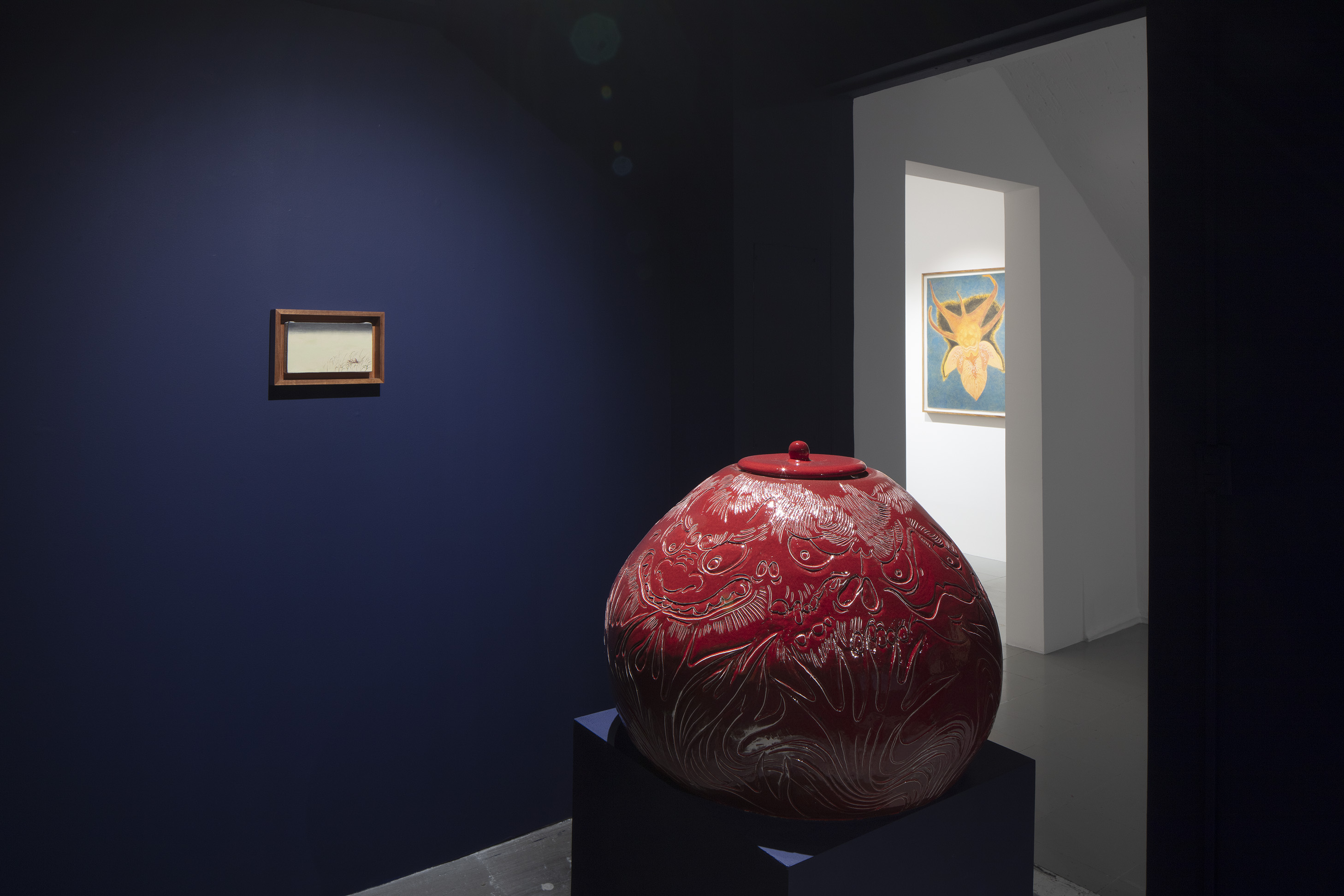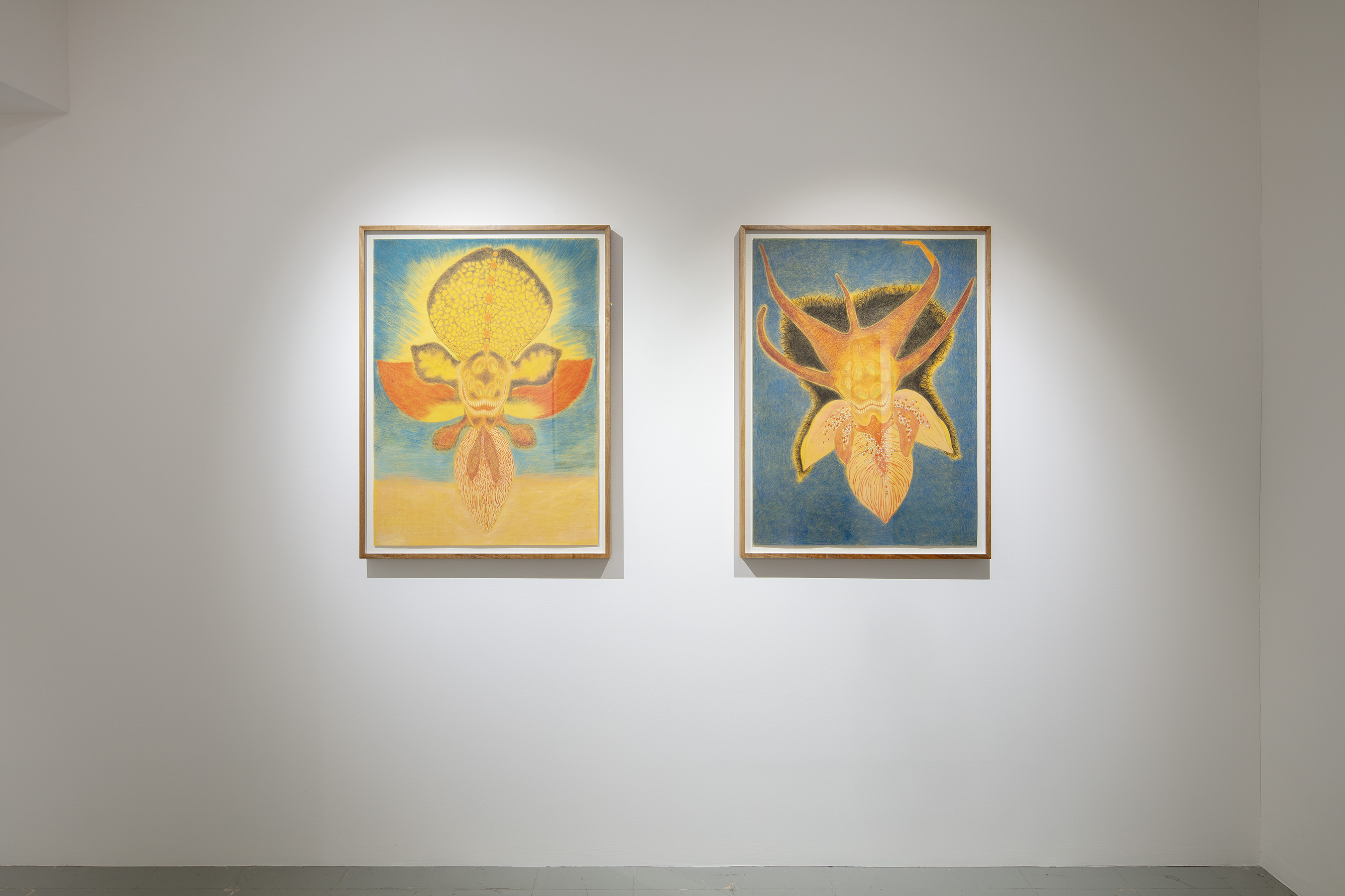

Pequod Co. is pleased to present "Tiras cósmicas Vol. 2: Pinturas de la muerte y los destinos", a solo exhibition by Javier Barrios.
There are moments in the world when a willingness to be disturbed becomes necessary. To refuse to look away from that which frightens us and makes evident our finitude and impotence as human beings. Is it in the convulsion of disturbance that we might find the strength to transmute the reality of our condemned bodies? What possibilities for transformation do the aesthetics of the sinister offer? What is at stake when the sublime is erased? Our contemporary societies are traversed by a systematic numbing that insists on the proliferation of imaginaries mobilized by fear and hope, ultimately generating an optimistic and harmless beauty as an antidote. Sensitively conditioned by this process, we refuse to be affected by the esth(ethical) power of trembling flesh and martyred blood.
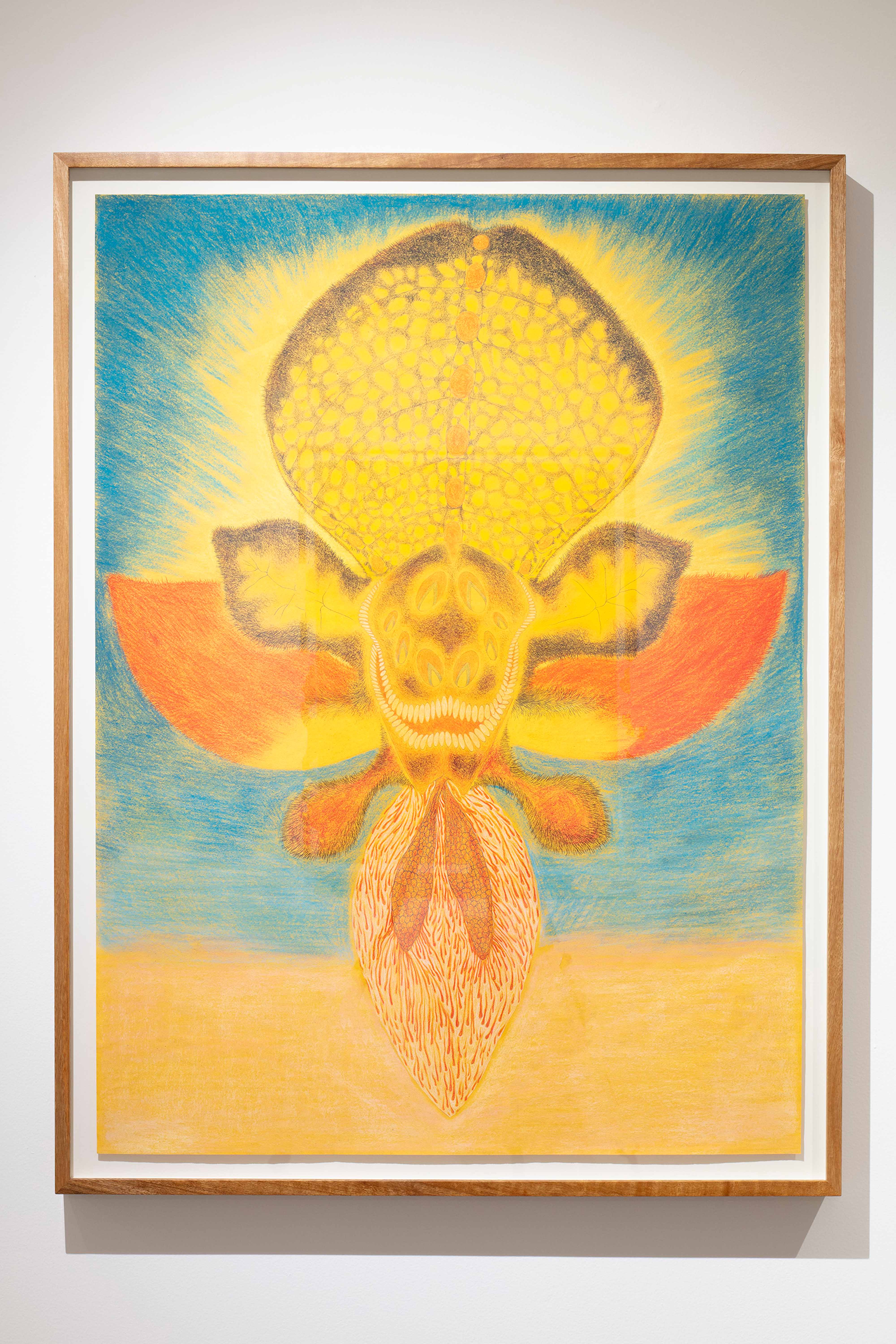
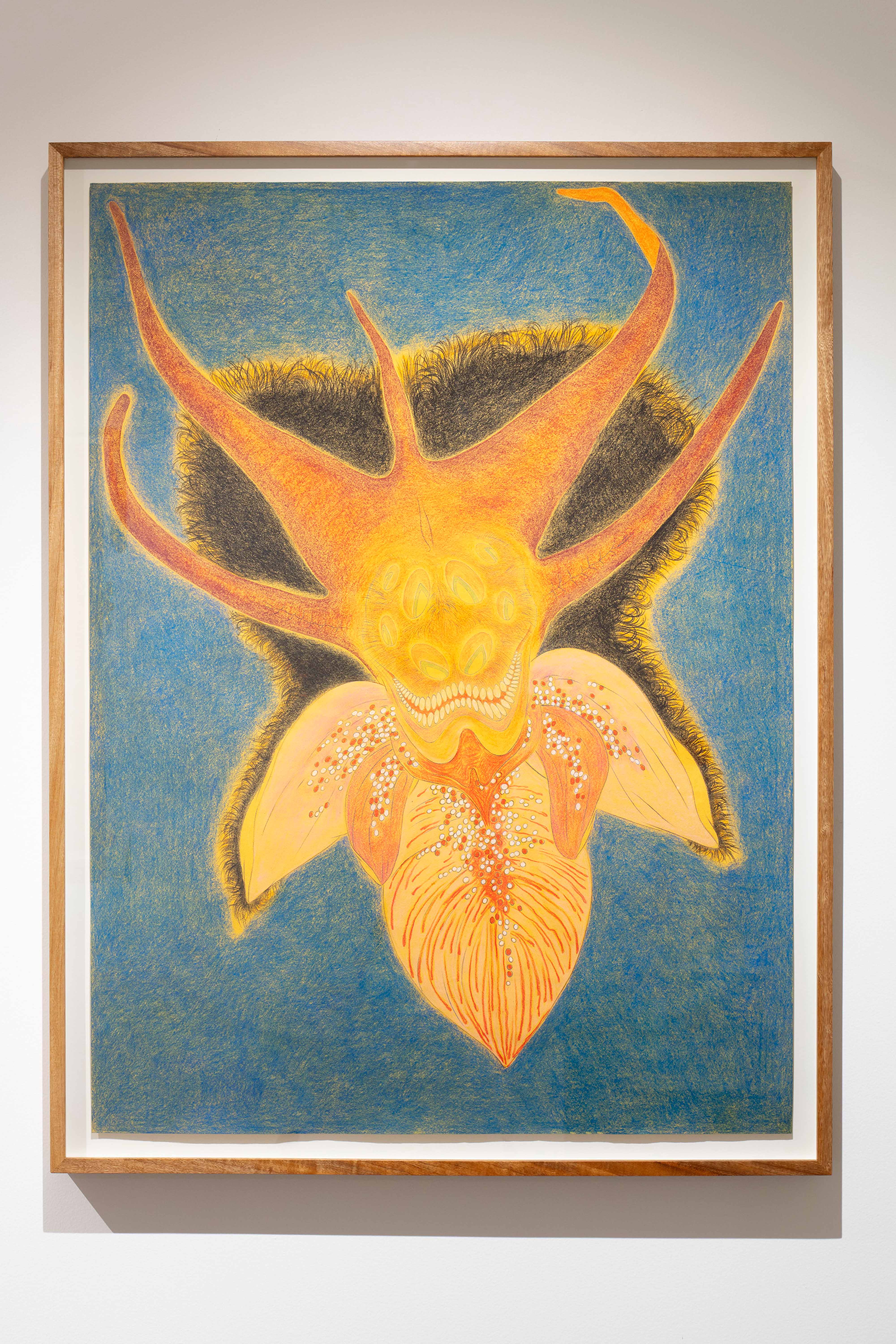
My intuition tells me that the modern rationalist fervor organizing the visual arts, within a context of intensified neoliberalism, has deprived us of recognizing the tingling presence—at the physical, psychic, and emotional levels—of certain sublime images in which the shadow of death or the radiant red of exposed blood appears. To render this possibility sensible, Javier Barrios turns to cosmic horror, opening through it a fissure in reality. From this crack emerges the figure of monstrous orchids that give rise to a spiritual mythology: imposing and fearsome deities, inhabitants of an infernal cosmos, who stand as omnipotent beings. Their revelation seems to seek the liberation of primordial chaos, where the vital force of existence is in constant revolution. At the same time, these are flowers that—through the complicity of the artist—rebel against their aesthetic domestication within botanical illustration, a genre that historically functioned as a catalogue for designing the gardens of empire. The flower thus ceases to be an object of representation under the mercantile gaze of the West and is instead recognized for its immeasurable and incomprehensible vital power, which exceeds the reductionism of beauty.
Like an exterminating angel, Barrios’s orchids— inspired by those that attract fetid pollinators—stare at us with spider eyes and smile with drooling fangs. Their petals seduce us with reptilian skin patterns, with the textures of their fur and their piercing veins, plunging us into humid sexual organs, suggestive folds exposed like viscera, whose juices give rise to the sodomization of the imagination.
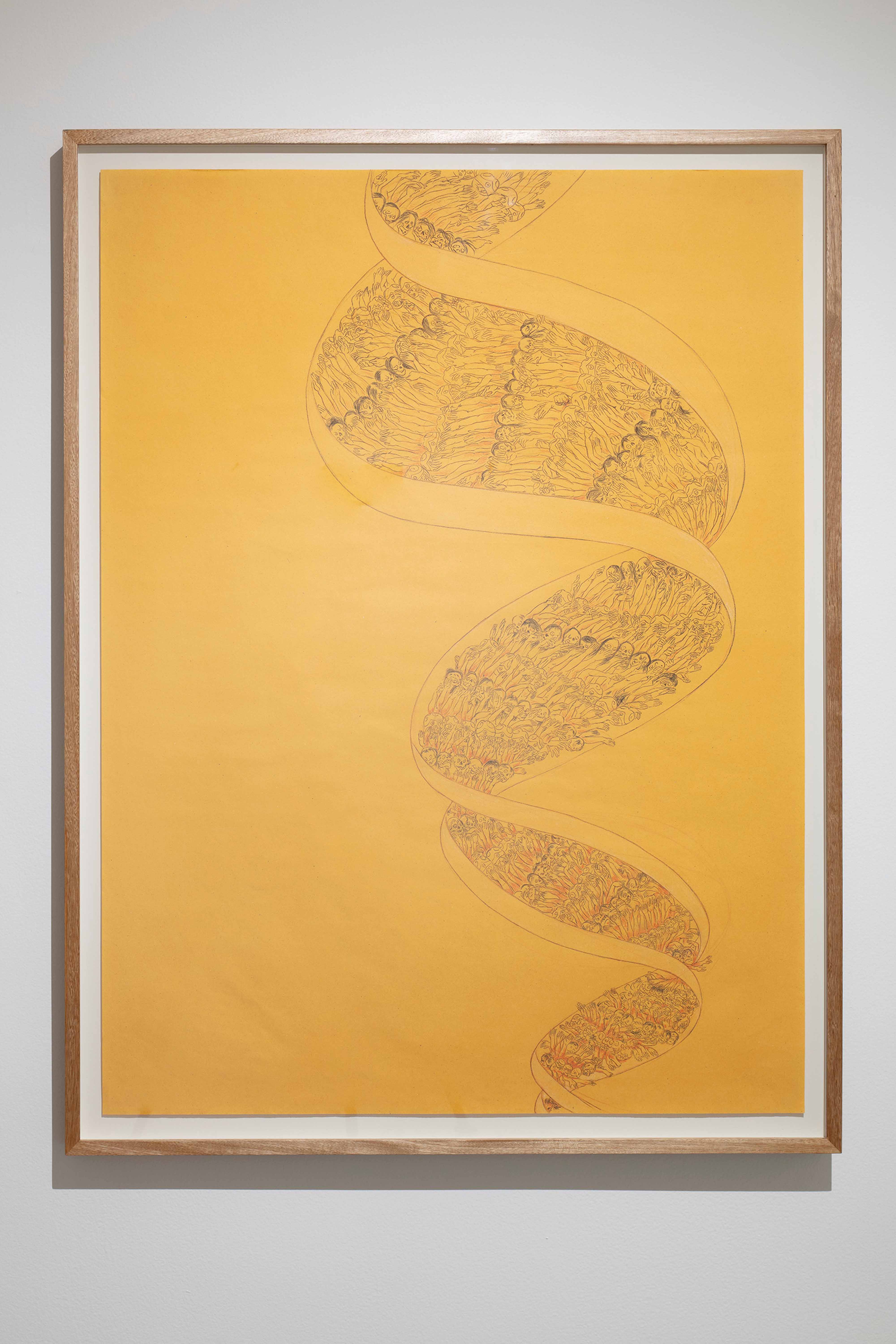
Suspended in a storm of blood that gives dimension to their power and reach, these angels seem to descend, opening their bulbs to reveal an aura that attracts through mystery and horrifies through excess, offering us the opportunity to attain a burning vision of open life.
Halfway between extraterrestrials and deities—former inhabitants of Earth and the universe—these flowers have unleashed the interdimensional flames of the underworld to reclaim the dominion of chaos that constitutes the planet. Has the moment come to lose fear and rehearse a willingness to be affected by the imposing, stripping ourselves of all presumption of human supremacy? Are we prepared to become migrants of this nation called humanity?
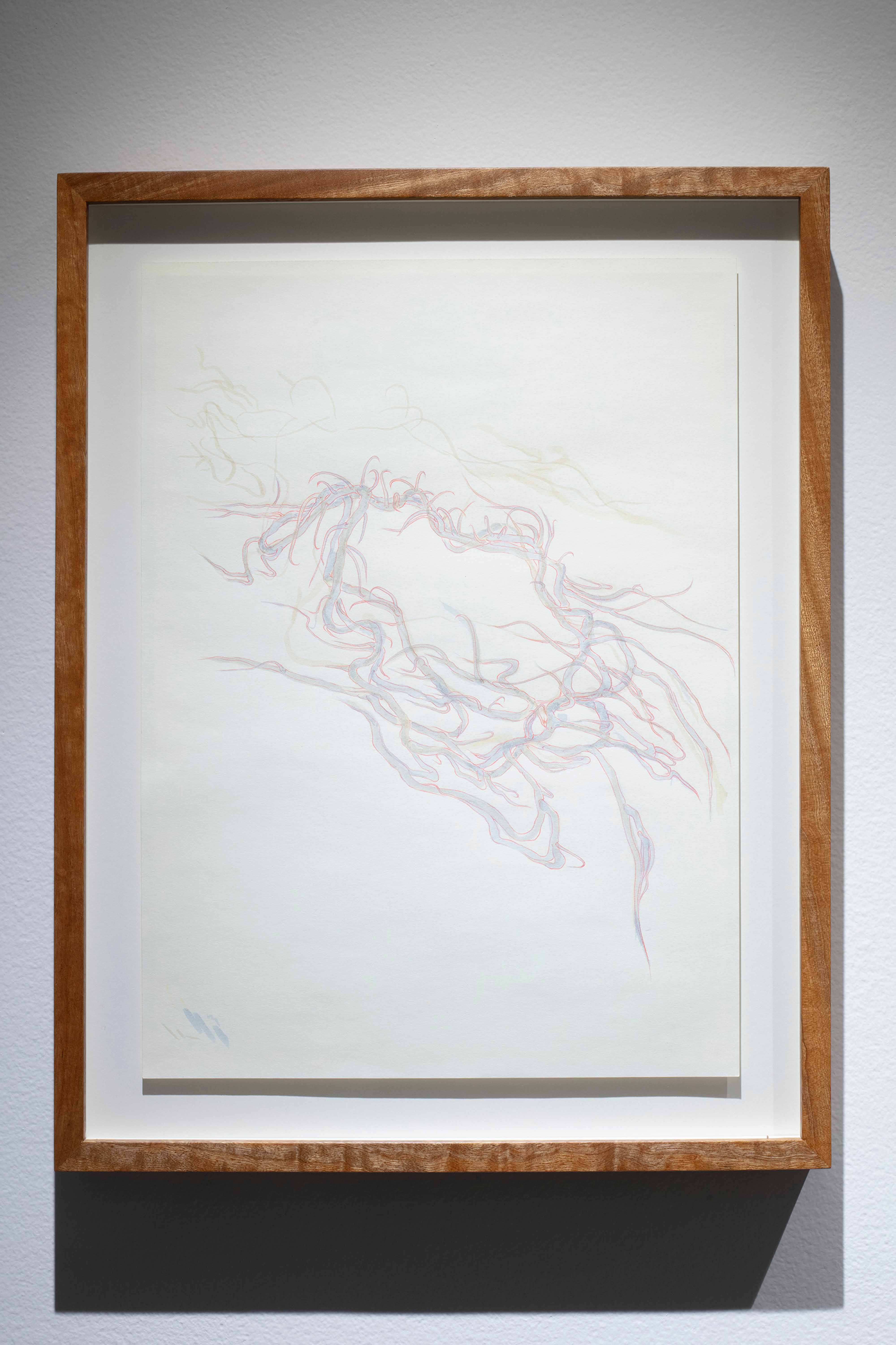
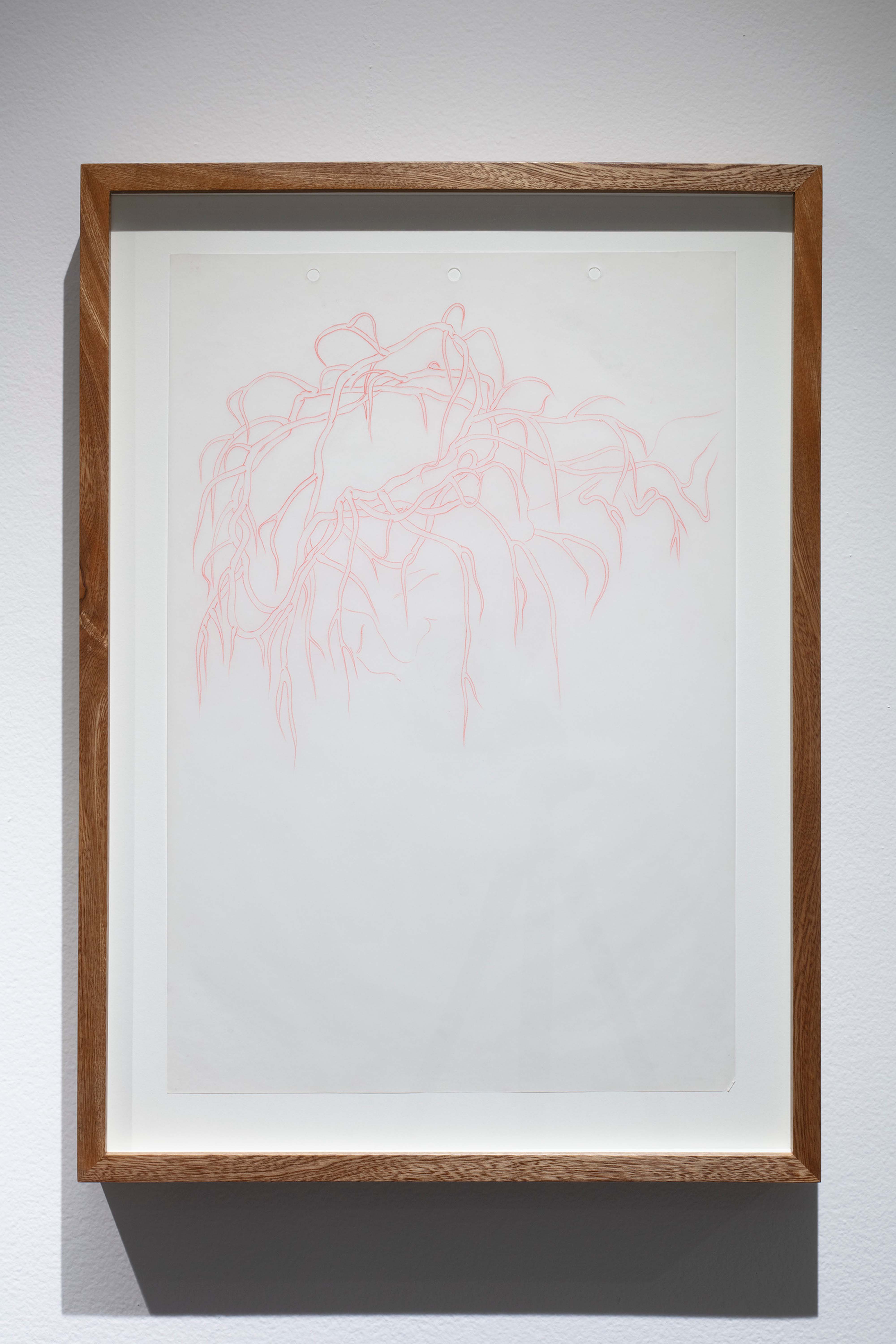
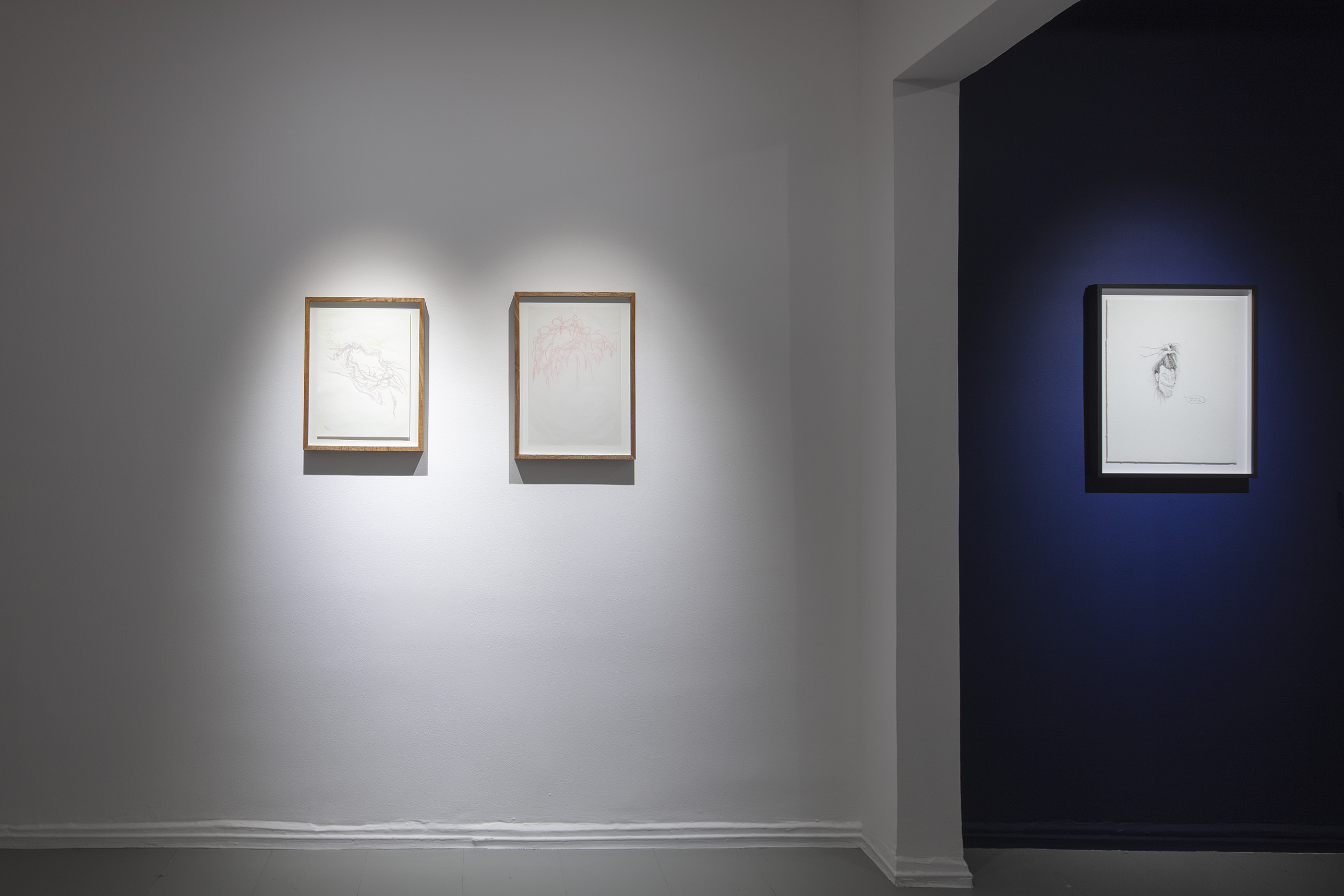
Before such radiance, Barrios presents us with a creeping crown of thorns that recalls the spiritual exhaustion of our era. This Western symbol, unique within the world’s mythological narratives, seems to be returning to its flexible condition as a living plant. In its softness, it refuses to serve as an instrument of ridicule and torture upon the body of Christ. Might this be a metaphor for our ethical strength to refuse an imposed destiny?
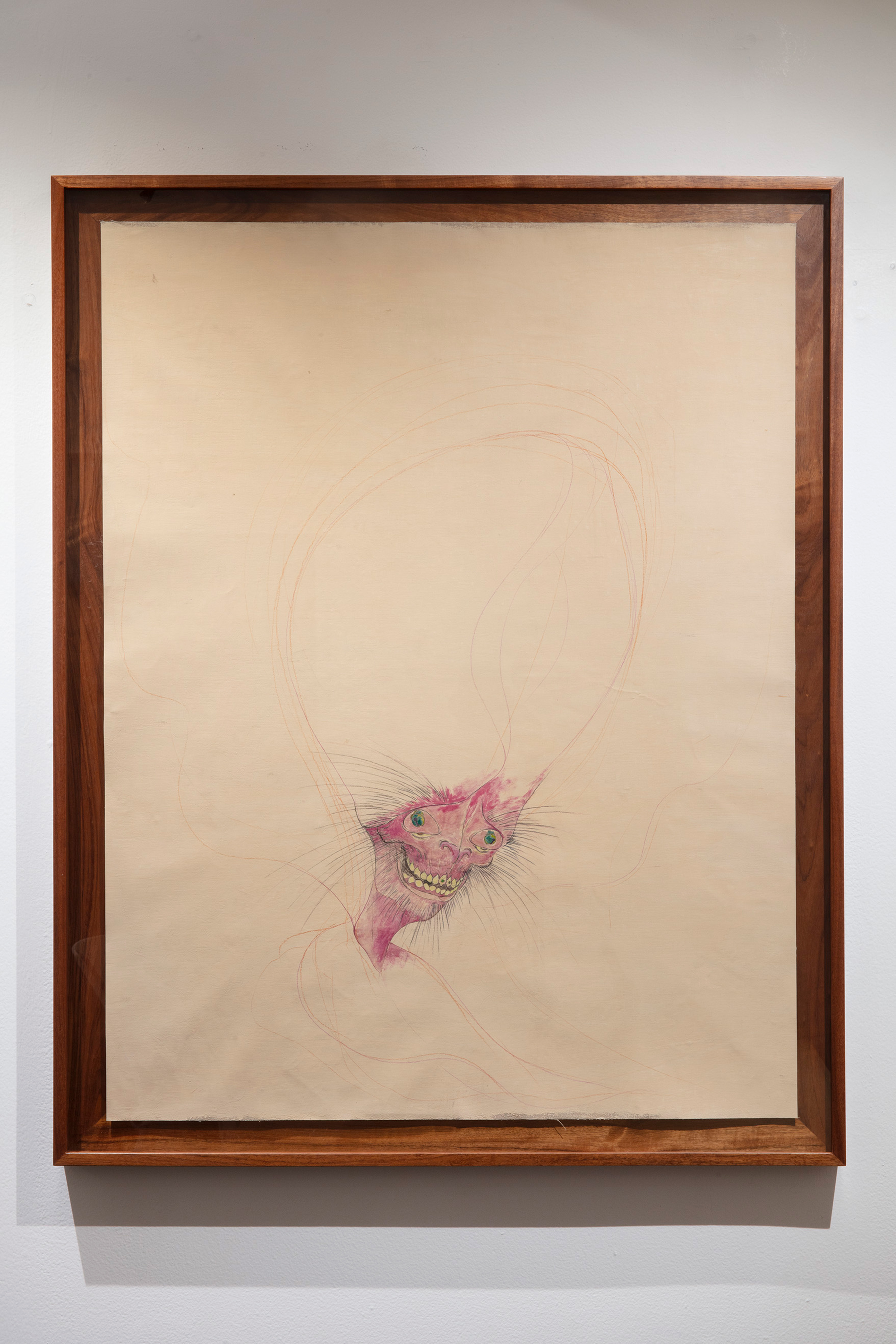
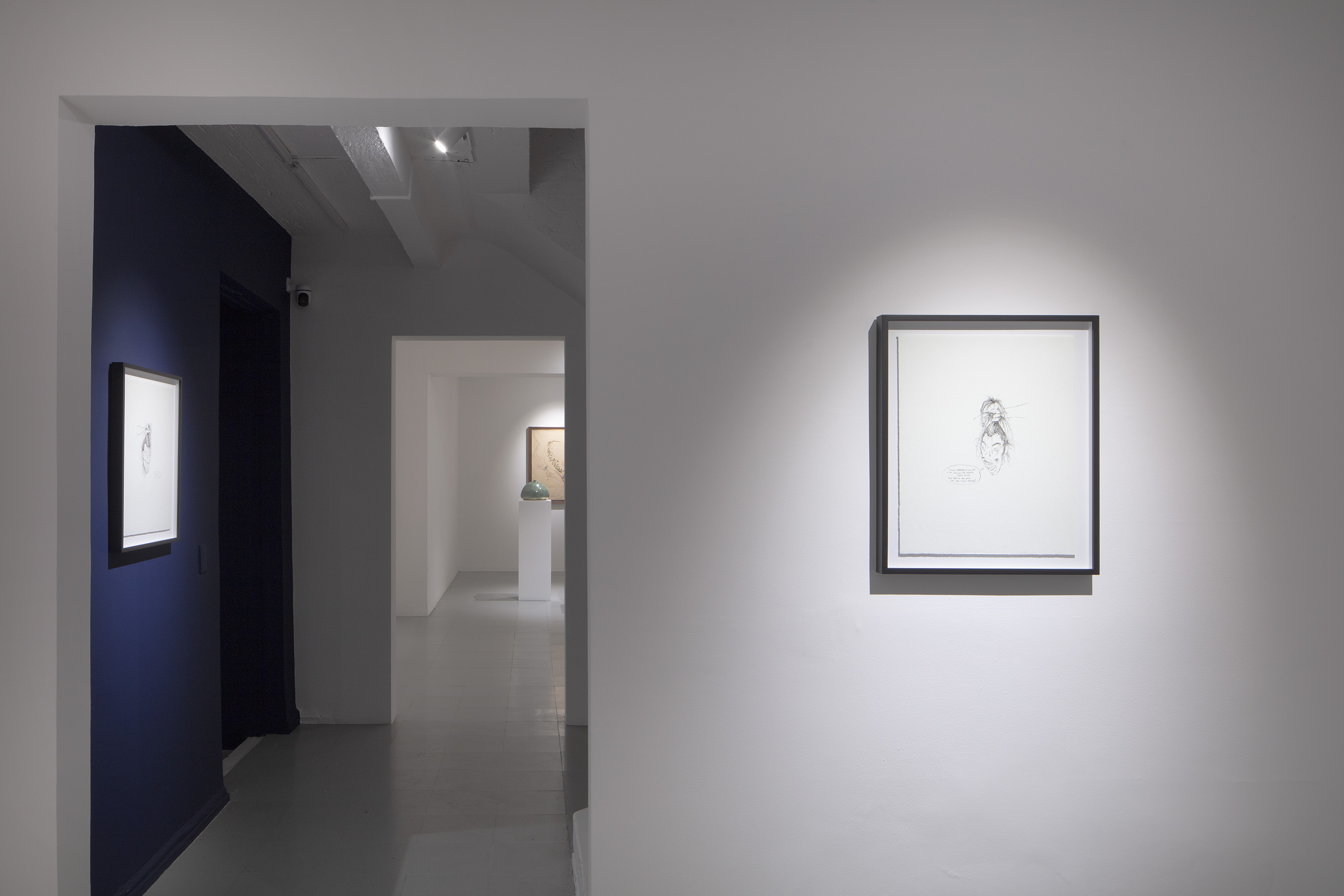
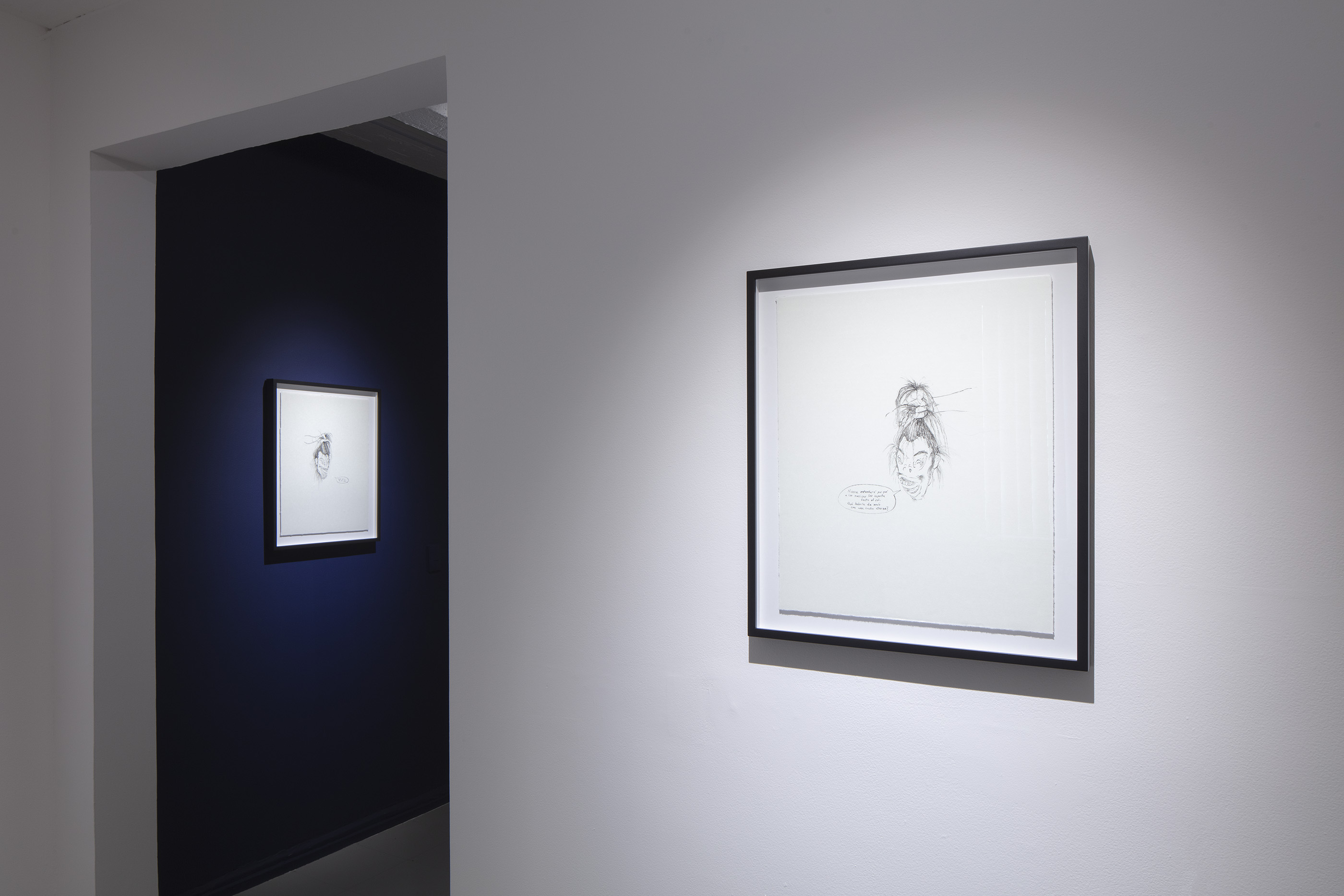
Only the wise scribes—in whose molecules the eternal cycle of death as the proliferation of life is hidden—have allowed themselves to be sufficiently disturbed, throwing themselves into living the secret delight of terror until shedding their human condition. Channeling the form of deities, the wise subtly appear in the mist of the drawing after attaining strange, mutant, and ineffable qualities through a trance entangled with the vitality of the territory that walks within their skulls. The invitation, then, is to gaze upon the abyssal chaosmos—a necessary commotion to abandon all certainty and rediscover the possibility of the sublime as a spiritual force.
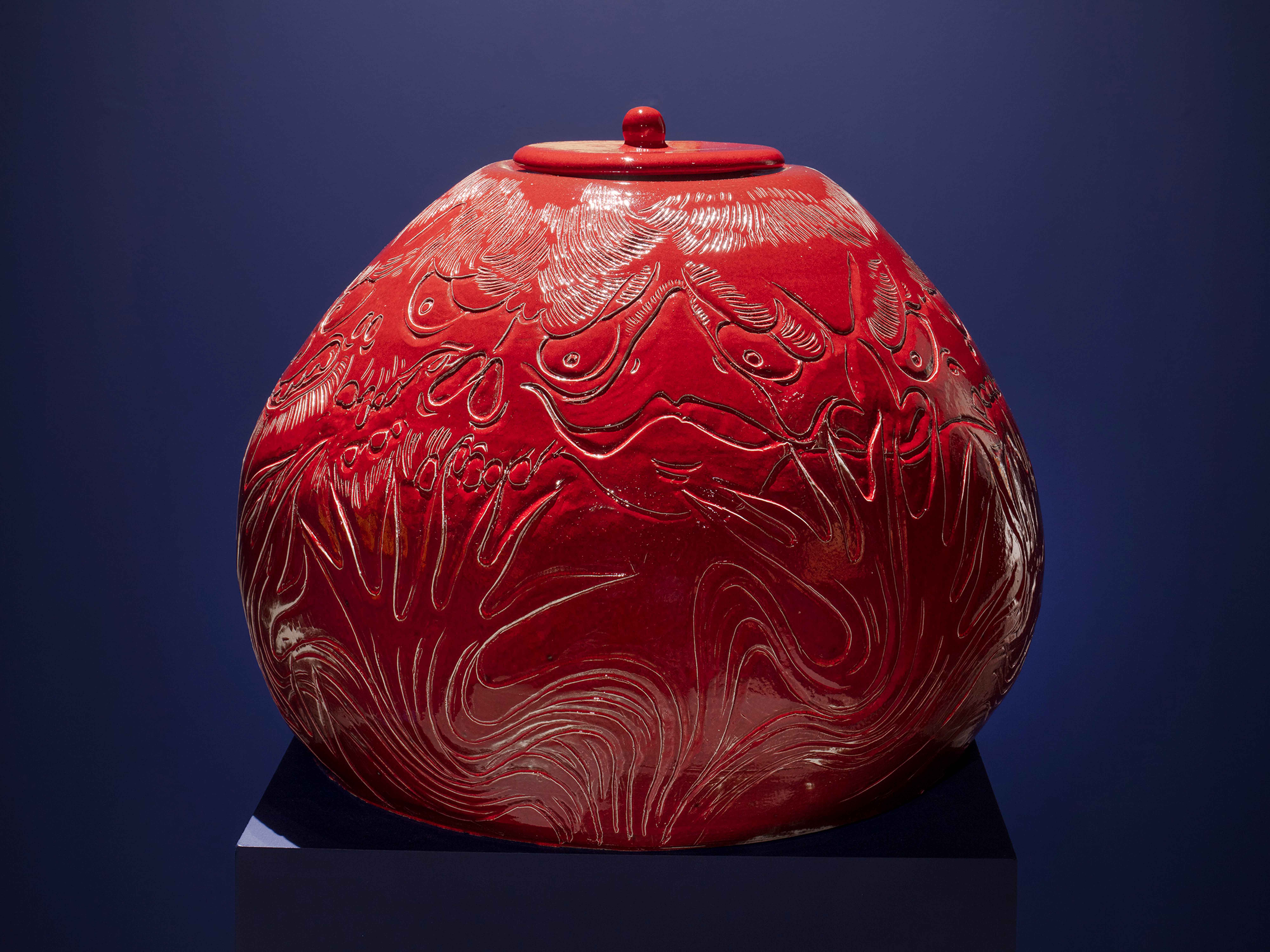
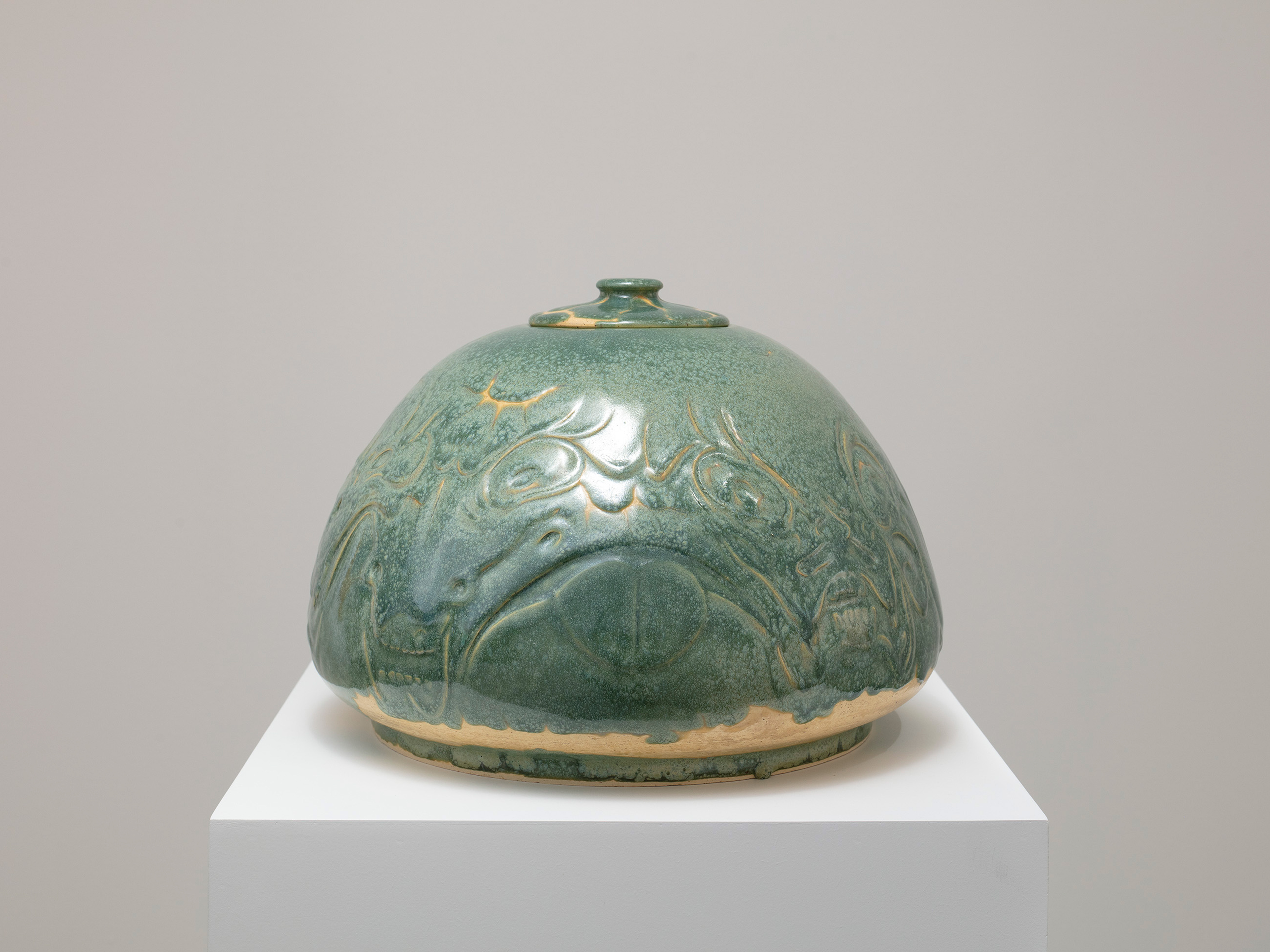
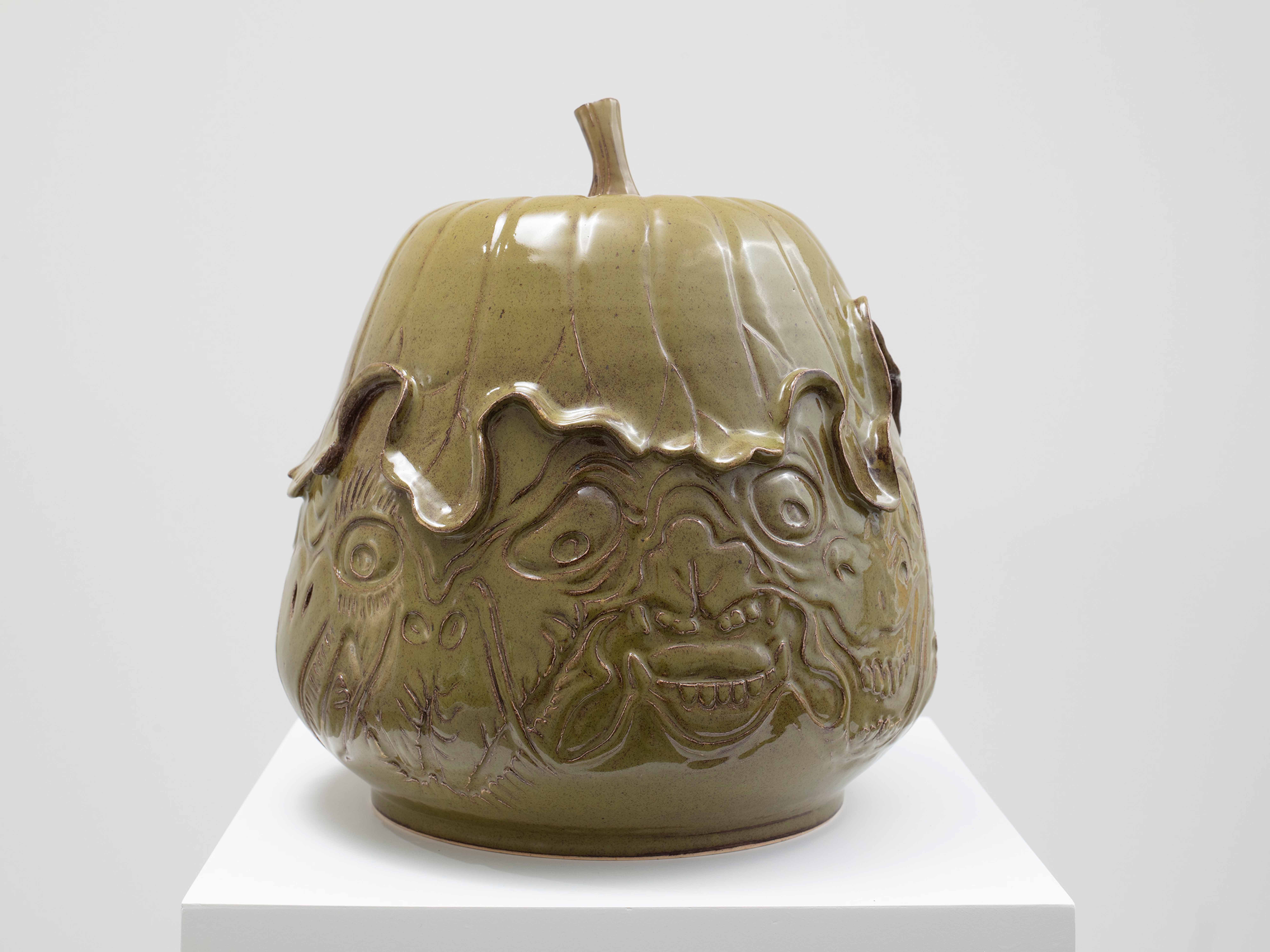
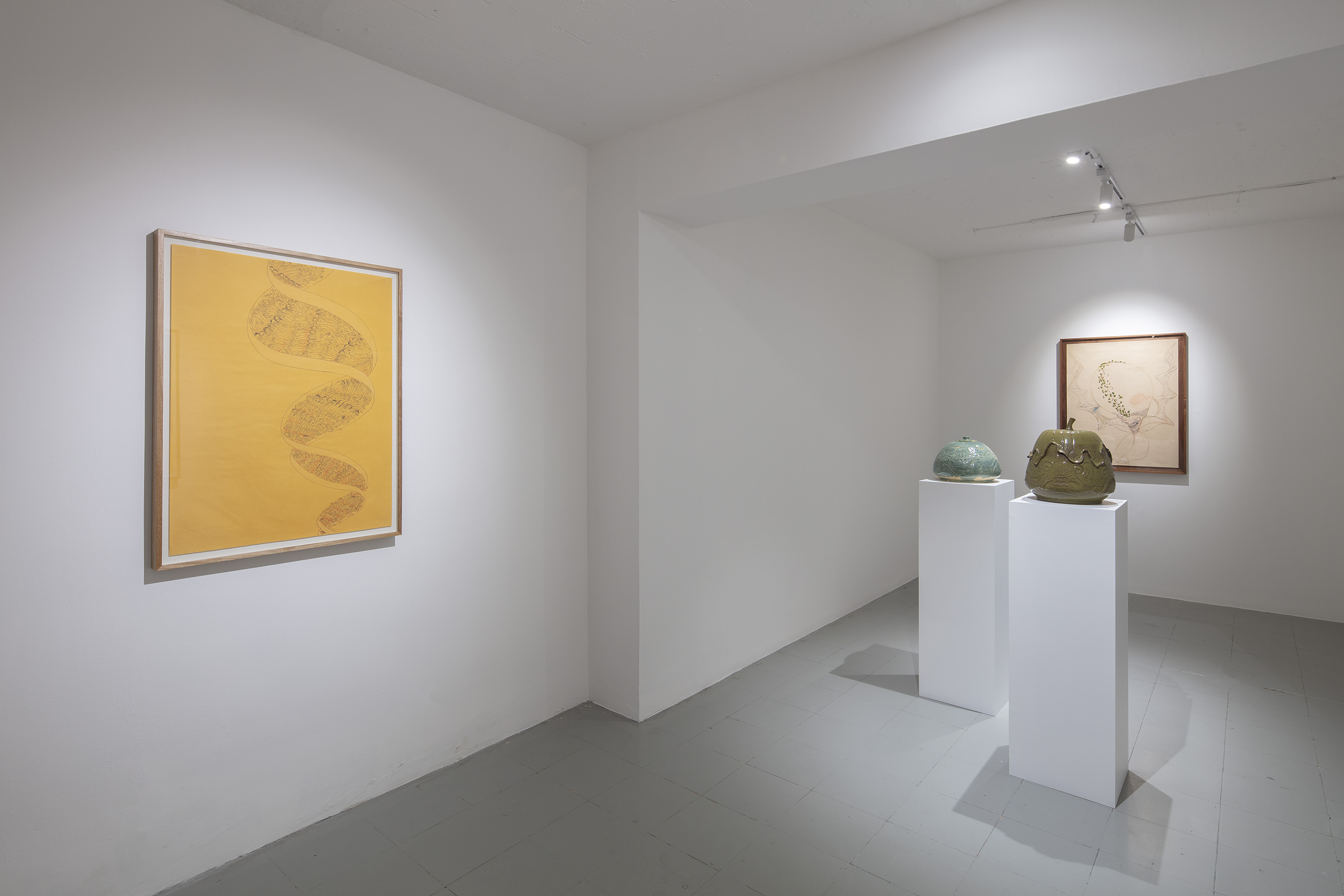
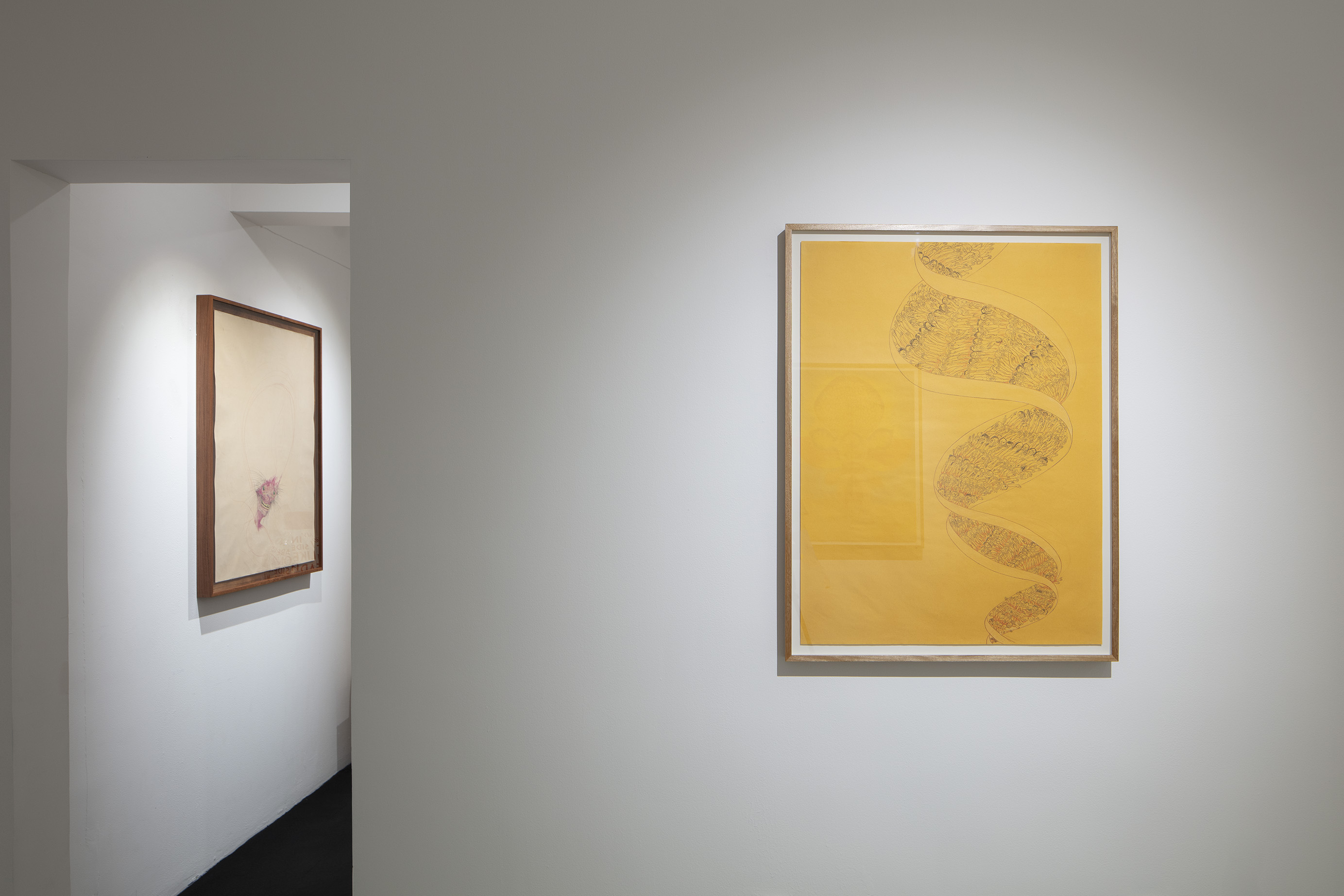
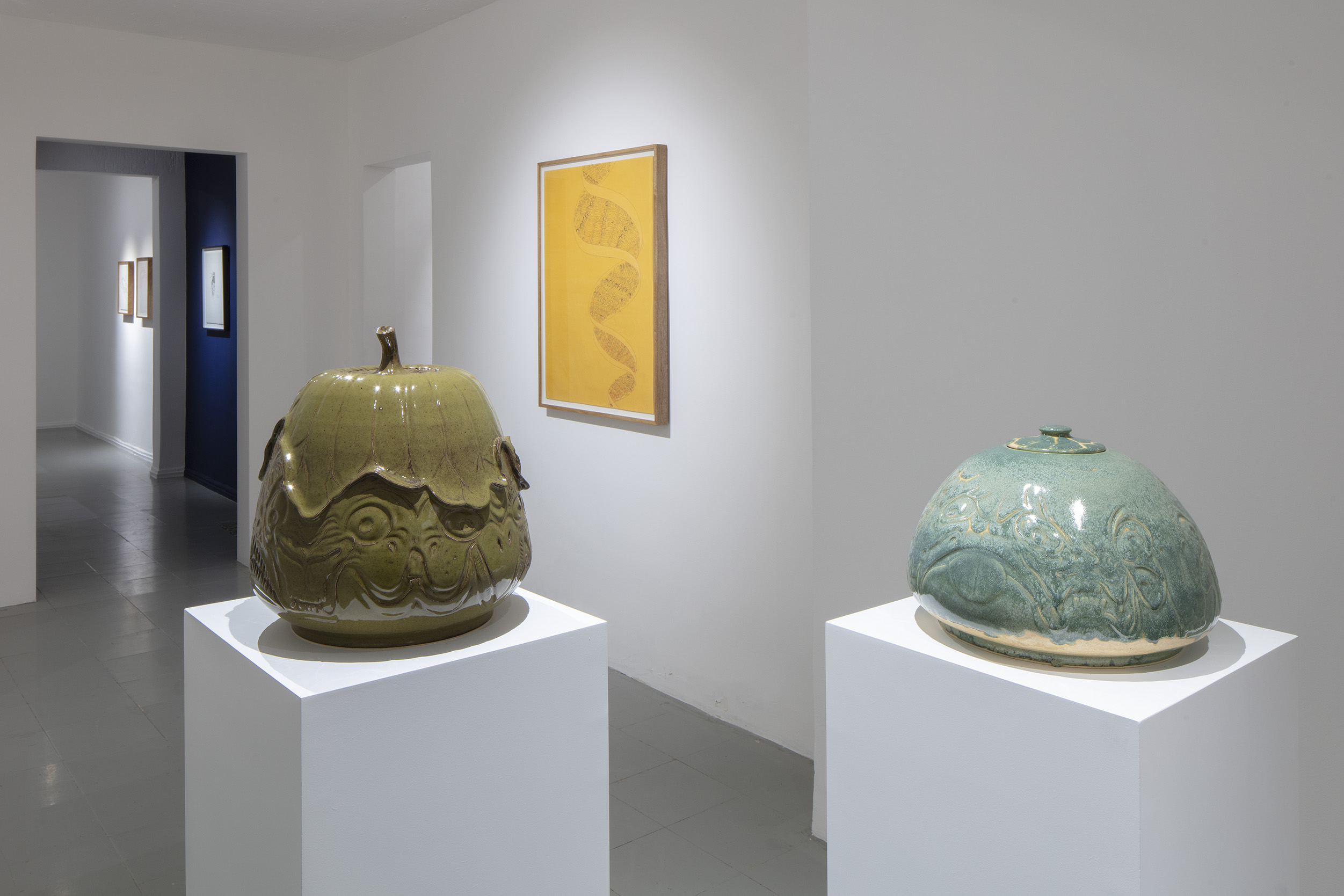
Through three mythical scenes commonly found in foundational narratives of Western humanity—the cave, the shipwreck, and the end of times—Barrios seeks to place all presumptions of power into perspective by confronting us with our mortality. On the one hand, his drawings and paintings— inspired by botanical and zoological illustration and paying homage both to Zapotec art forms and to Japanese and Chinese drawing—recall the power of mythologies that express the ambivalence of existence. Thus, they elicit a dual feeling: curiosity and wonder before the limitless mystery they offer, and horror at the absence of footholds. This conjunction situates us before the vertigo of the indecipherable and the uncertain, seeking to activate our joyful passions in order to escape reason and civilizational sanity. On the other hand, his ceramics address mourning and the eternal cycle of life and death, shaking our spirituality to open a question about our relationship with death. These are funerary urns, created from the faces of nine demons who share eyes and mouths in order to guard human remains in eternal rest—that rest which will fuse us with the eternal night.
-Diego del Valle Ríos
Opening
February 2, 2026 | 13 - 20 h